In demanding industrial environments, reliable air power is non-negotiable. Stationary systems have their place. Yet modern workflows demand mobility and resilience. This is where the true value of an industrial portable air compressor shines. These units are engineered for more than occasional use. They are built for rigorous, daily operation in the toughest conditions. Choosing the right one is a critical decision. It impacts project timelines, operational costs, and on-site productivity. This guide cuts through the noise. We focus on what truly matters for heavy-duty applications. You will gain a clear framework for selection. We will explore technical needs, compare options, and provide actionable advice. Our goal is to help you secure a mobile air source that delivers relentless performance. This ensures your teams have the power they need, precisely where they need it.
Why You Need an Industrial Portable Air Compressor for Heavy‑Duty Work
Standard portable compressors often fall short on industrial job sites. They are designed for lighter tasks. Industrial-grade portable models are a different category entirely. They bridge the gap between fixed plant air and mobile needs. These machines deliver high airflow, sustained pressure, and unwavering durability. They move seamlessly across rough terrain. This capability is vital for industries where the work location constantly changes. Investing in a proper industrial portable air compressor transforms operational flexibility. It eliminates dependency on distant central air systems. It also avoids the downtime caused by undersized, overwhelmed equipment. For critical operations, this isn’t just a tool. It is a cornerstone of mobile infrastructure.
- Demanding Environments & Tough Use Cases
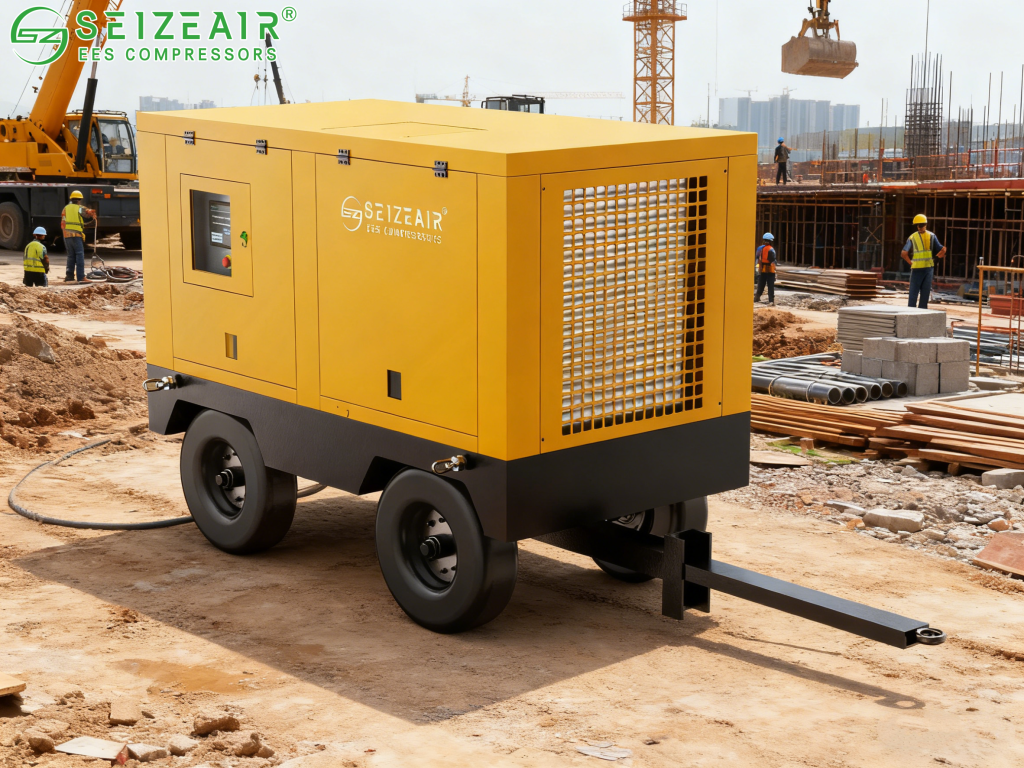
Industrial portable compressors face unique challenges. Imagine a remote mining site where drilling and bolting require constant, high-pressure air. Consider a large-scale construction project. Crews use pneumatic jackhammers, impact wrenches, and sandblasters across multiple zones. Automotive and fleet repair teams need reliable air for heavy tools. They service large vehicles in varied locations. Manufacturing plants use them for mobile maintenance. They power line tools or provide backup during system shutdowns. In each scenario, the environment is harsh. Dust, debris, temperature extremes, and rough handling are everyday realities. A true heavy duty portable air compressor for construction or mining is built to withstand these elements. It ensures that air power is never the bottleneck in demanding work. - Key Technical Requirements: CFM, PSI, Duty Cycle, Portability, Reliability
Understanding key specs separates adequate from exceptional performance.- CFM (Cubic Feet per Minute): This is airflow volume. It is the most critical metric for running tools. Heavy-duty tools like large grinders or sandblasters demand high CFM. An undersized unit will cause tools to stall.
- PSI (Pounds per Square Inch): This is air pressure. It must be sufficient to activate tools effectively. Most industrial tools require 90-120 PSI.
- Duty Cycle: This indicates continuous run capability. A 100% duty cycle means it can run non-stop. A 50% cycle means it needs rest. For sustained industrial use, a high (70-100%) duty cycle is essential.
- Portability: This involves towability, wheel size, frame strength, and weight. Large, pneumatic tires and a robust chassis are key for towable portable air compressor for job site mobility.
- Reliability: This stems from component quality. It includes industrial-grade pumps, engines, motors, and control systems. Reliability ensures minimal downtime over years of service.
What to Look For: How to Choose the Best Industrial Portable Air Compressor in 2025
Selecting the right unit requires a strategic approach. It balances immediate needs with long-term value. Do not just compare specifications. Consider how each factor interacts with your specific application. The following framework will guide your evaluation. It focuses on the decisive elements for industrial and heavy-duty use.
- Power Source: Diesel, Electric or Gas — Pros & Cons
Your primary power choice defines the unit’s application scope.- Diesel: The king of remote and high-power sites. A diesel industrial portable air compressor offers high torque, excellent fuel efficiency for large tanks, and no need for grid power. It is ideal for mining, remote earthworks, and large construction sites. However, it has higher emissions, noise, and initial cost.
- Electric: Perfect for factories, workshops, and sites with grid access. An electric portable compressor for factory use is cleaner, quieter, and has lower operating costs. It requires a suitable power supply (often 3-phase for larger models). Its range is limited by cord length or available outlets.
- Gasoline: Offers good mobility and power. It is common in North America for contracting. It is less fuel-efficient than diesel for continuous heavy use. It is best for varied job sites with fuel access but no power.
- Airflow & Pressure Capacity (CFM & PSI/Tank Size)
Match your compressor to your most demanding tool. Always check the tool’s CFM requirement at the required PSI. Add a 30-50% buffer for efficiency and future needs. For multiple tools running concurrently, sum their CFM needs. Tank size stabilizes pressure and handles short, high-demand bursts. For continuous high-CFM applications, a large tank is less critical than a compressor with a high continuous CFM output. Prioritize a high flow portable air compressor for pneumatic tools if running sandblasters or large grinders. - Portability & Mobility: Wheels, Frame, Weight, Ease of Transport
“Portable” has different meanings. Evaluate based on your site terrain. Look for a heavy-duty steel frame. Seek large, pneumatic tires for soft or rough ground. Check the tow hitch rating for road speed. Consider overall dimensions for storage and transport. The best industrial portable air compressor for mining or construction balances robust air power with genuinely mobile design. - Durability, Maintenance & Long-Term Cost
The purchase price is just the start. Consider the total cost of ownership.- Pump Type: Rotary screw compressors are top-tier for continuous, high-volume air. They are durable and efficient for constant use. Reciprocating (piston) compressors are common. Industrial two-stage models are very capable for intermittent heavy use.
- Lubrication: Oil-injected designs (screw or piston) last longer under constant use. They require oil changes but are generally more durable. Oil-free models reduce maintenance but may have a shorter lifespan under heavy industrial loads.
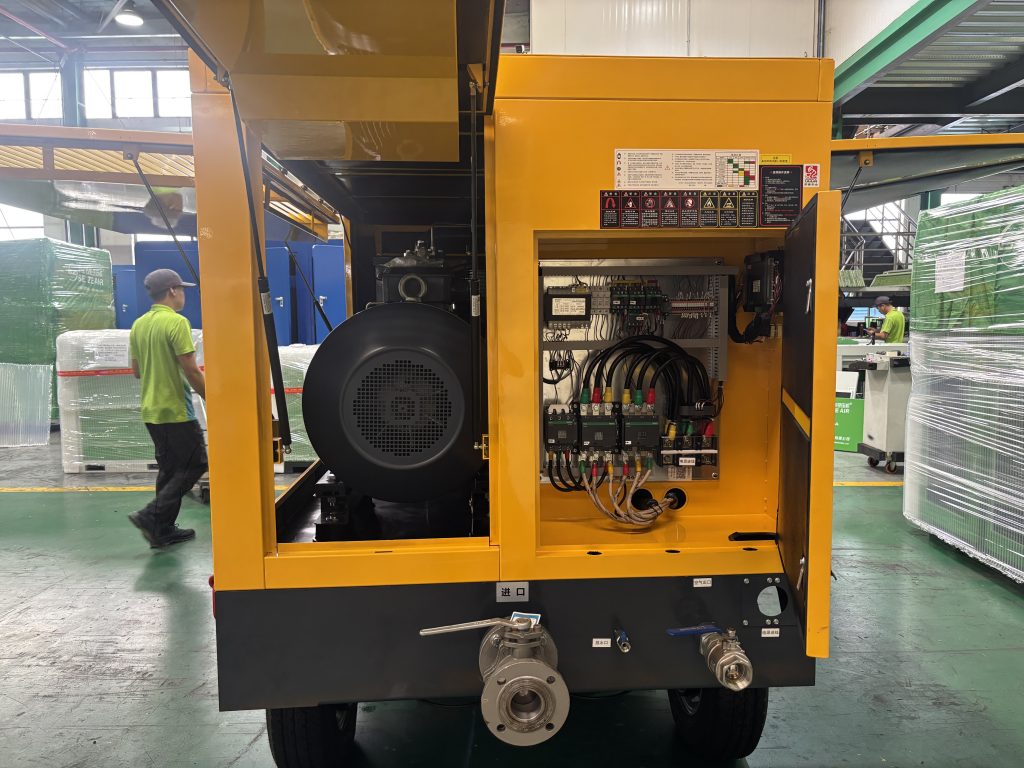
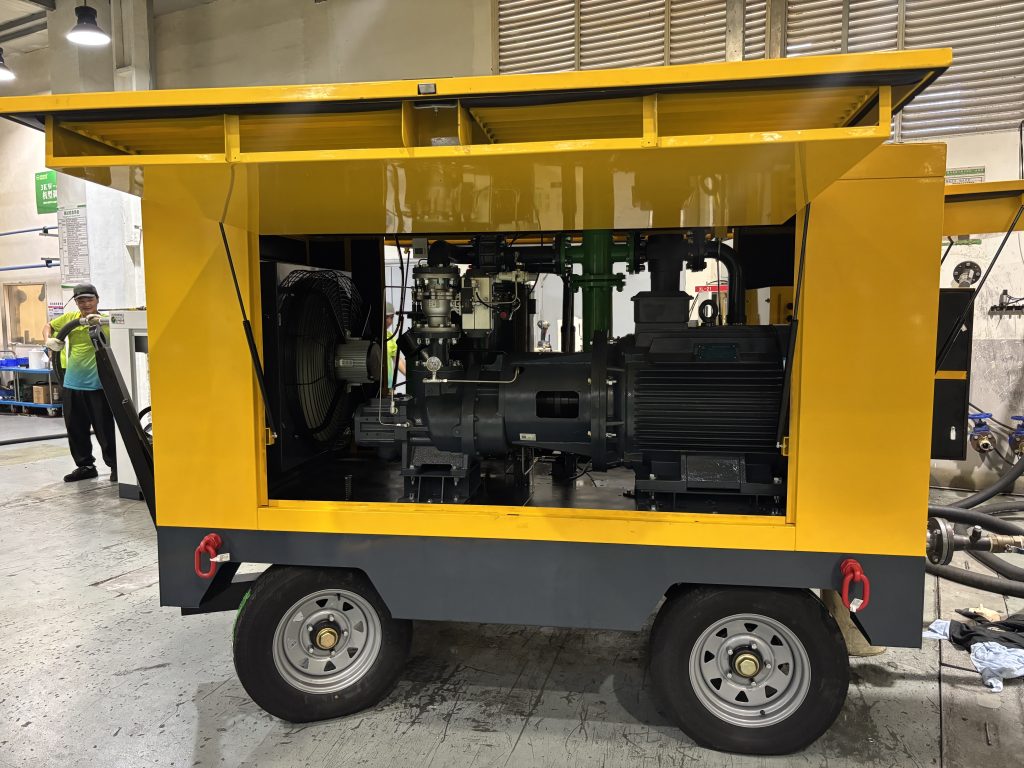
- Service Access: Can you easily check oil, clean filters, and access service points? Good design reduces maintenance time and cost.
- Parts & Support: Choose a model with readily available service parts and strong distributor support.
- Noise Level & Site Suitability
Noise matters in urban sites or enclosed spaces. Electric and some modern diesel models are quieter. Check the decibel (dBA) rating. If noise is a constraint, look for units with acoustic enclosures. This makes an electric portable compressor for factory or urban repair work a considerate choice.
Top Industrial Portable Air Compressor Types & Recommended Use Cases (2025)
Instead of listing specific brands, we categorize by application. This helps you identify the right type of industrial portable air compressor for your core challenges. These categories align with common operational profiles in industry.
- Heavy‑Duty Construction & Mining Sites – High Flow & High Pressure Models
- Profile: Demanding, continuous operation. Multiple high-CFM tools. Remote or harsh environments.
- Key Features: High-displacement diesel engines. Large-capacity rotary screw or two-stage piston pumps. CFM outputs often 80-160+. Robust, high-clearance carriage with large tires. Large fuel tanks for all-day operation. These are the workhorses for the most demanding tasks, truly fitting the heavy duty portable air compressor for construction label.
- Priorities: Maximum CFM/PSI, 100% duty cycle, extreme durability, towability.
- Mobile Maintenance & Repair Crews – Diesel‑Powered Towable Compressors
- Profile: Teams servicing infrastructure, fleets, or utilities in varied locations. Needs reliable, self-contained air.
- Key Features: Mid to large-sized diesel industrial portable air compressor units. Balanced CFM (40-100) for powerful tools like impact wrenches and paint sprayers. Excellent towability for highway speeds. Often a quiet(er) diesel or advanced piston design. Good service access for field maintenance.
- Priorities: Reliability, ease of transport, good CFM range, fuel efficiency, serviceability.
- Workshop & Factory Backup – Electric or Belt‑Driven Portable Compressors
- Profile: Primary or backup air for manufacturing cells, workshops, or plants. Where clean, quiet, and continuous air is needed in a fixed but flexible location.
- Key Features: Electric portable compressor for factory settings, often 3-phase. Rotary screw models excel here for continuous duty. Belt-driven piston compressors offer good value and serviceability. Focus on low noise and clean air output (with proper filtration).
- Priorities: Consistent pressure, low noise, energy efficiency, low maintenance, clean air.
- Occasional Use / Light Heavy‑Duty – Balanced Value Compressors
- Profile: Smaller contractors, plant maintenance for intermittent tasks. Needs to handle serious tools but not for 8-hour continuous use.
- Key Features: A durable affordable industrial portable air compressor. Often a high-quality two-stage piston unit (gas or electric). Solid CFM in the 20-40 range for tools like nailers, ratchets, or small sandblasters. Good portability with a sturdy frame.
- Priorities: Value for money, sufficient power for key tools, durability, ease of movement.
How to Maintain and Extend the Lifespan of Your Industrial Portable Air Compressor
Proactive maintenance is the single biggest factor in longevity and reliability. Follow the manufacturer’s schedule meticulously. Keep a log. Here is a universal guide for a heavy duty portable compressor maintenance guide:
- Daily/Pre-Start: Check engine/oil level. Drain air tank condensate. Inspect for leaks or loose parts.
- Weekly/Monthly: Check and clean air intake filters. Inspect hoses and fittings. Test safety valves.
- Scheduled Service (Per Hours Run): Change compressor oil and filter. Change engine oil and filters (diesel/gas). Replace air/oil separator (screw compressors). Clean fuel systems and coolers.
- Annual/Seasonal: Comprehensive inspection by a technician. Check valve operation and motor brushes. For winter, use proper oil grades. Drain all condensate to prevent freezing. For storage, run to warm, drain, and store in a dry place.
Industrial Portable Air Compressor Investment — What You Get vs What It Costs
Viewing this purchase through a total cost lens is crucial for professionals. The initial price of a proper industrial portable air compressor is higher. However, the long-term economics favor quality.
- Upfront Cost: Covers the machine, its engineering, and component quality.
- Operational Cost: Includes fuel/electricity, routine maintenance, and repairs. High-efficiency models (like modern screw compressors) save significantly on energy.
- Cost of Downtime: This is the hidden expense. A failed compressor can idle an entire crew. Reliability directly protects your project profitability.
- Productivity Gain: The right CFM means tools work at peak power. Jobs finish faster. Crews accomplish more per day.
- Flexibility Value: The ability to move air power anywhere eliminates logistical delays. It creates new operational possibilities.
The investment pays back through uninterrupted operations, lower long-term repair costs, and enhanced team capability. It is an investment in predictable, controllable productivity.
Frequently Asked Questions (FAQ)
- What PSI/CFM do I need for heavy‑duty tools?
Most heavy-duty tools need 90-120 PSI. CFM varies greatly: a large impact wrench may need 20-30 CFM, while a sandblaster can require 50-100+ CFM. Always check your tool’s actual CFM requirement at 90 PSI. Total the CFM for tools running simultaneously. - Diesel vs Electric — which is better for a job site?
For remote, high-power, or all-day runtime needs, diesel is best. For fixed sites, workshops, or where noise/emissions are concerns, electric is superior. It offers lower running costs and smoother operation. - How often should I service my industrial portable air compressor?
Strictly follow the manual. For heavy use, engine oil changes may be needed every 100-200 hours. Compressor oil changes (for screw/oiled piston) range from 500-2000 hours. Daily checks are essential. A detailed heavy duty portable compressor maintenance guide from your supplier is key. - Can I use a portable compressor for continuous industrial work?
Yes, if it is rated for it. Look for a 70-100% duty cycle and a compressor technology designed for continuous run time, like a rotary screw. This is what defines a true portable screw air compressor for industrial use. - What is the best diesel portable compressor for heavy duty applications?
The “best” depends on your specific CFM needs, budget, and brand support. Focus on models known for reliability from established manufacturers. Look for units with a proven track record in your industry, whether for mining or large-scale construction.
Conclusion – Why Investing in the Right Industrial Portable Air Compressor Matters
Choosing an industrial portable air compressor is a strategic decision. It directly influences your operational capacity, cost control, and project success. In heavy-duty environments, compromise leads to frustration and lost revenue. By focusing on true technical requirements, matching the machine to your use case, and committing to proactive maintenance, you secure more than a piece of equipment. You secure a reliable source of productivity that moves with your business needs. For those seeking reliable, energy-efficient solutions, it is worth exploring options from experienced manufacturers. Companies like SEIZEAIR, a Chinese manufacturer known for its reliable and energy-saving rotary screw air compressors, offer a range of industrial-grade portable models designed to meet these rigorous demands.