Choosing the Right Portable Air Compressor Manufacturer Matters
In real industrial environments, a portable air compressor is rarely selected based on specifications alone. It is chosen under pressure—tight project schedules, remote job sites, extreme climates, and high downtime costs. For this reason, selecting the right portable air compressor manufacturer is a strategic decision that directly impacts productivity, operating cost, and project risk.
Many buyers only discover after deployment that not all portable air compressor manufacturers design equipment for continuous, real-world abuse. While brochures may list similar airflow and pressure ratings, actual performance differences emerge after thousands of operating hours.
As global infrastructure, mining, oil & gas, and construction projects continue to expand, procurement teams face an increasingly crowded and confusing market. This article provides a manufacturer-level comparison of portable air compressors, focusing on engineering depth, manufacturing discipline, and lifecycle value—rather than brand slogans or short-term pricing.
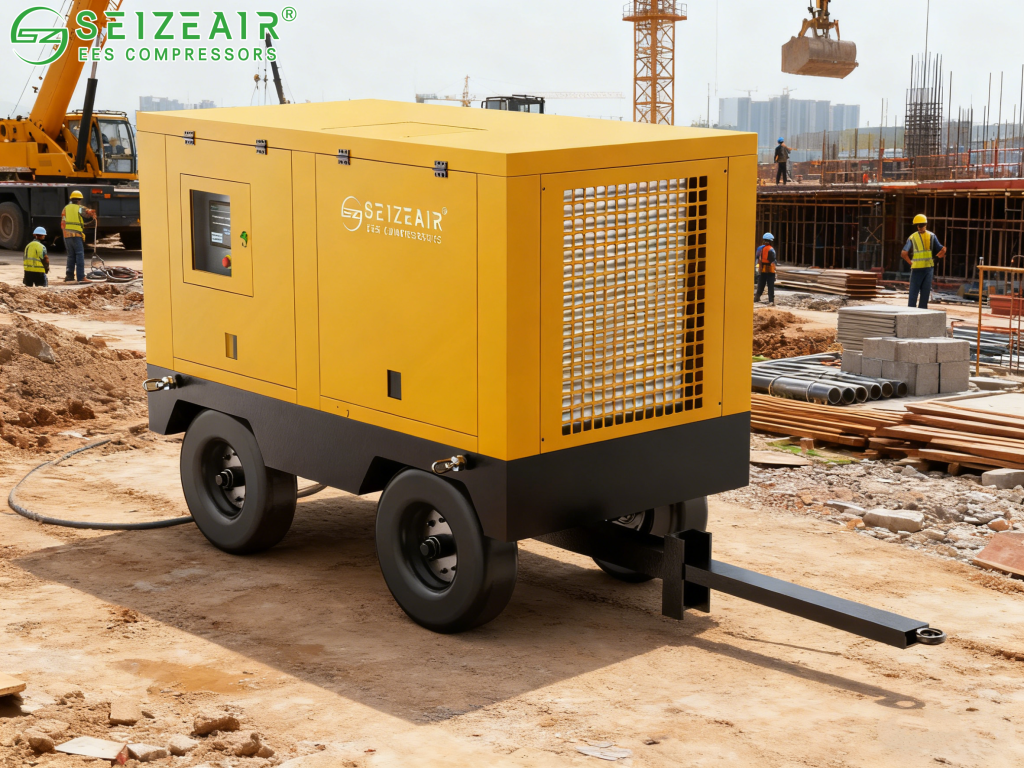
What Defines a Professional Portable Air Compressor Manufacturer?
A common misconception is that portable air compressors are standardized products. In reality, the design philosophy and manufacturing capability of a portable air compressor manufacturer determine how reliably the equipment performs under sustained load.
1. Engineering Capability Beyond Basic Assembly
A professional portable air compressor manufacturer does not simply assemble an engine and air end into a steel enclosure. Instead, the entire system is engineered as a unified platform.
Key indicators of advanced engineering capability include:
- Precise matching between engine torque curves and compressor load profiles
- Proprietary or deeply customized rotary screw air ends
- Structural vibration analysis to prevent fatigue failure
- Cooling airflow simulation for high-temperature and dusty environments
Manufacturers lacking these capabilities often rely on generic layouts. While such machines may meet rated specifications initially, they frequently suffer from overheating, unstable airflow, or premature component wear during continuous operation.
2. Component Strategy and Long-Term Supply Stability
Experienced buyers understand that component brands alone do not guarantee reliability. A professional portable air compressor manufacturer selects components based on system compatibility and long-term availability.
Critical considerations include:
- Global service and spare-parts support
- Proven performance under fluctuating load conditions
- Compliance with export and emissions regulations
A well-integrated mid-tier system often outperforms a poorly matched configuration built with premium components.
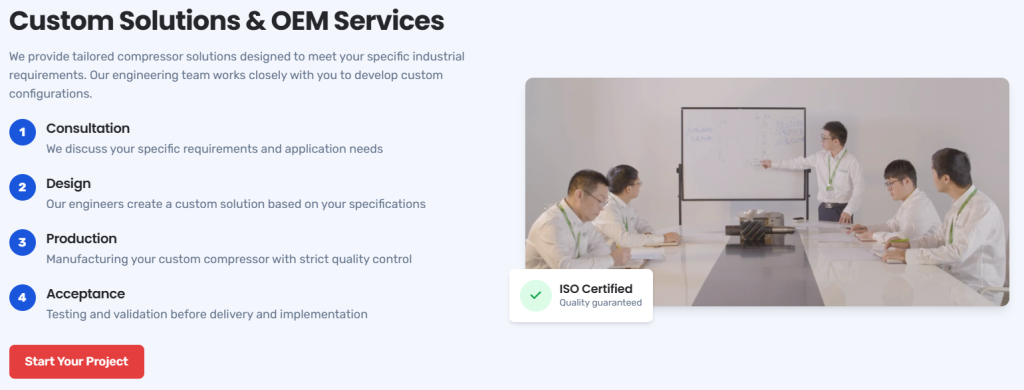
3. Manufacturing Discipline and Quality Control
Manufacturing consistency is a key differentiator among portable air compressor manufacturers. Reliable manufacturers apply:
- Standardized assembly procedures
- Torque-controlled fastening systems
- Pressure, leakage, and load testing before shipment
- Full serial-number traceability
Factories that skip endurance testing effectively transfer reliability risk to end users, increasing long-term operating cost.
Key Technical Factors That Differentiate Portable Air Compressor Manufacturers
Airflow Stability Under Real Operating Conditions
Rated airflow values are measured under laboratory conditions. On actual job sites, portable air compressors must operate under:
- High ambient temperatures
- Altitude variation
- Dust-laden intake air
- Extended continuous-duty cycles
Manufacturers with advanced control logic and properly sized air ends deliver stable, usable airflow, not just theoretical ratings.
Fuel Efficiency and Lifecycle Operating Cost
Fuel consumption differences between portable air compressor manufacturers often become apparent only after months of operation. Influencing factors include:
- Load/unload control accuracy
- Idle speed management
- Engine–compressor synchronization
Over a multi-year lifecycle, even small efficiency gaps can result in significant cost differences.
Cooling System Design for Harsh Environments
Inadequate cooling remains one of the leading causes of portable air compressor downtime. Professional manufacturers design cooling systems with:
- Oversized radiators
- Independent oil and air cooling circuits
- Easy-clean layouts for dusty job sites
Buyers operating in hot regions often underestimate cooling requirements until repeated shutdowns occur.
Noise Control and Operator Safety
Noise control is not only a regulatory concern—it also reflects enclosure and structural design quality. High-end portable air compressor manufacturers address noise through:
- Vibration isolation mounts
- Optimized airflow paths
- Integrated acoustic insulation
Portable Air Compressor Manufacturer Market Segmentation
Tier 1: Global Premium Manufacturers
Typically based in Europe, Japan, or North America, Tier 1 manufacturers emphasize maximum compliance and engineering refinement.
Strengths:
- Exceptional durability in extreme environments
- Extensive global service networks
- Strong residual value
Limitations:
- High acquisition cost
- Limited customization flexibility
Typical Price Range: USD 25,000–60,000+
Best suited for operations where downtime risk outweighs capital expenditure.
Tier 2: Advanced Industrial Portable Air Compressor Manufacturers
Tier 2 manufacturers bridge the gap between premium brands and low-cost suppliers. They focus on industrial reliability, export compliance, and cost efficiency.
Strengths:
- Strong performance-to-price ratio
- Export-oriented quality systems
- Flexible configurations for different applications
Limitations:
- Service quality depends on distributor capability
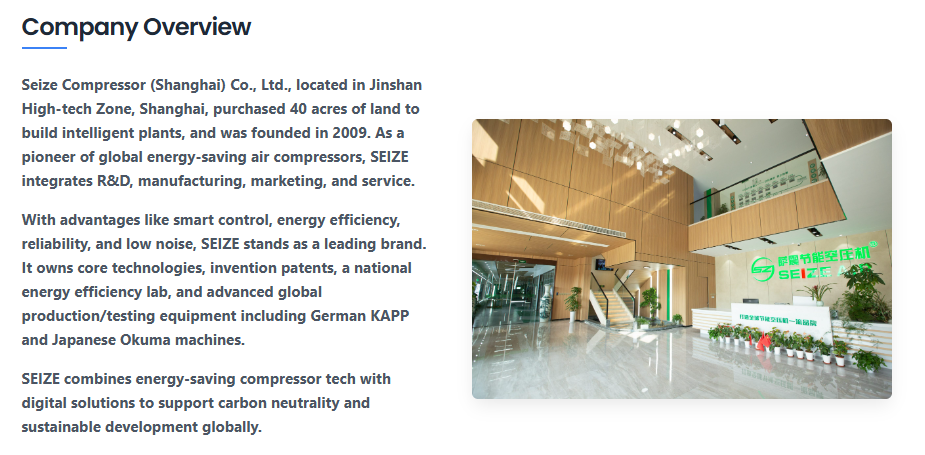
Manufacturers such as Seize fall into this category, emphasizing system-level engineering, internationally sourced components, and application-driven solutions rather than brand-driven pricing.
Typical Price Range: USD 12,000–30,000
Tier 3: Entry-Level and Price-Driven Manufacturers
These manufacturers compete primarily on upfront cost.
Strengths:
- Low initial investment
Risks:
- Inconsistent assembly quality
- Limited endurance testing
- Higher long-term failure rates
Typical Price Range: USD 6,000–12,000
Suitable mainly for short-term or low-duty applications.
Price vs Total Cost of Ownership (TCO)
Focusing solely on purchase price often leads to higher long-term expenditure. Experienced buyers evaluate:
- Fuel consumption over the operating lifecycle
- Maintenance frequency and service accessibility
- Downtime impact on project schedules
- Equipment resale or redeployment value
A mid-priced portable air compressor from a disciplined manufacturer often delivers lower total cost of ownership than a cheaper alternative.
Compliance, Export Readiness, and Global Market Access
A professional portable air compressor manufacturer designs with regulatory foresight. Key indicators include:
- CE compliance for European markets
- EU Stage V or EPA Tier 4 emissions options
- Multilingual technical documentation
- Export-grade packaging and logistics support
Manufacturers with established export experience integrate compliance considerations early, reducing risk for distributors entering regulated markets.
Common Mistakes When Comparing Portable Air Compressor Manufacturers
Even experienced procurement teams can make avoidable mistakes:
- Overvaluing rated airflow without considering real operating conditions
- Underestimating cooling and filtration requirements
- Assuming engine brand alone guarantees system performance
- Ignoring service accessibility in remote regions
Avoiding these pitfalls often has a greater impact than choosing the highest-specification machine on paper.
How to Choose the Right Portable Air Compressor Manufacturer
A practical evaluation framework includes:
- Does the manufacturer specialize in portable air compressors?
- Are core components globally supported and traceable?
- Is system integration validated under continuous load?
- Does pricing reflect long-term operating realities?
- Can configurations be adapted to specific applications or regions?
Strong partnerships form when manufacturer capabilities align with operational demands—not marketing claims.
Final Perspective
As job-site demands intensify and regulations grow more complex, the role of the portable air compressor manufacturer becomes increasingly critical. Sustainable performance depends less on headline specifications and more on engineering discipline, manufacturing consistency, and lifecycle thinking.
Manufacturers that balance industrial-grade reliability with rational pricing—rather than extremes at either end of the market—are becoming the preferred choice for global infrastructure, mining, and construction projects.