Compressed air is often called the “fourth utility” of industry, right after electricity, water, and gas. Yet on many job sites, the most valuable compressed air does not come from a fixed plant room inside a factory. It comes from a rugged, self-contained machine that can be towed to a remote valley, dropped beside a concrete foundation, or parked overnight in a crowded urban street. That machine is the portable air compressor.
For contractors, mine operators, and equipment rental companies, portable compressors are not a luxury. They are a core production asset that determines whether a project starts on time, whether a drill keeps cutting, and whether a rental fleet can meet the demands of dozens of different customers. This article explores the main applications of portable air compressors across construction, mining, and rental operations, and explains how to choose between diesel-driven and electric-driven units for each use case.
Why Portable Air Compressors Matter
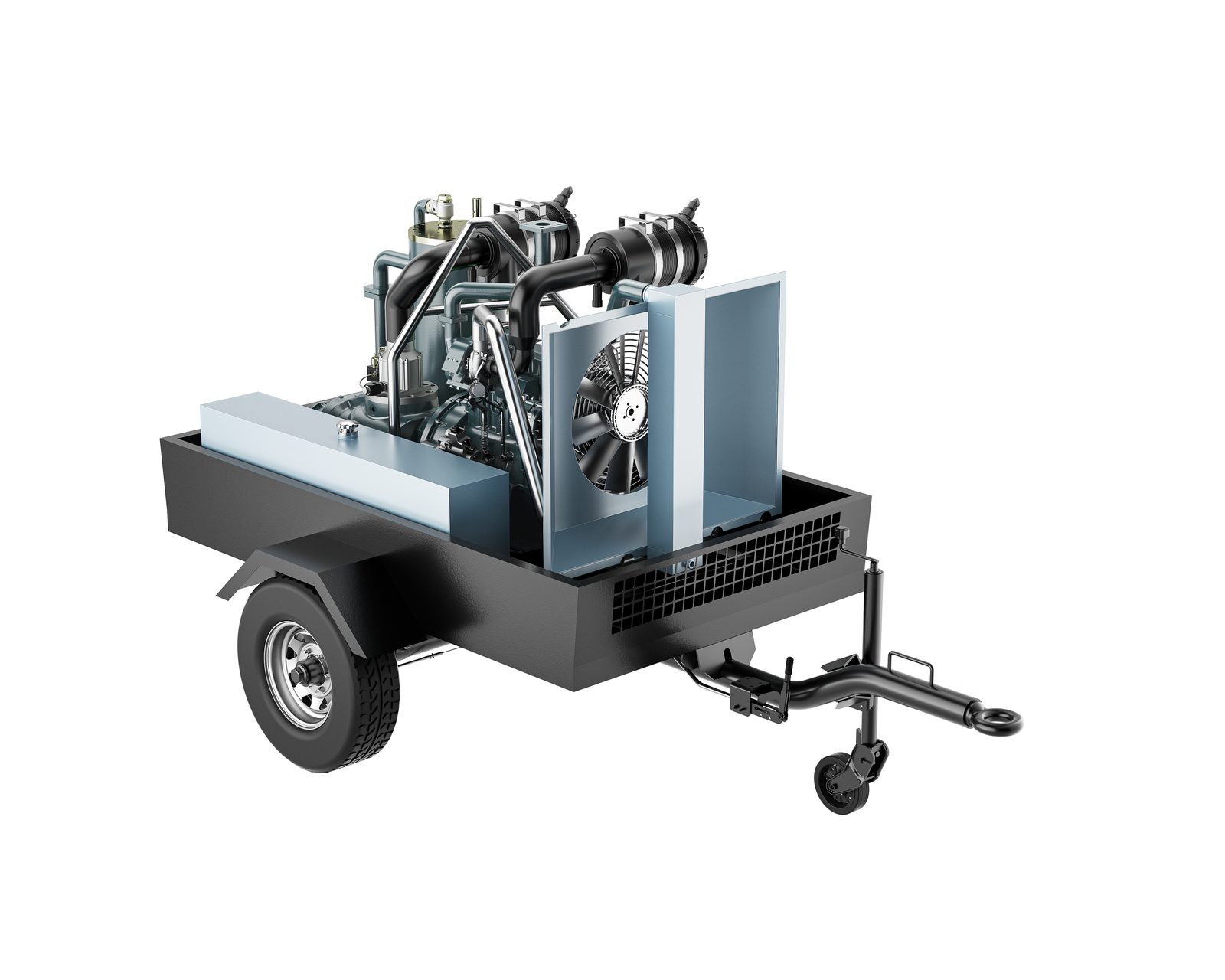
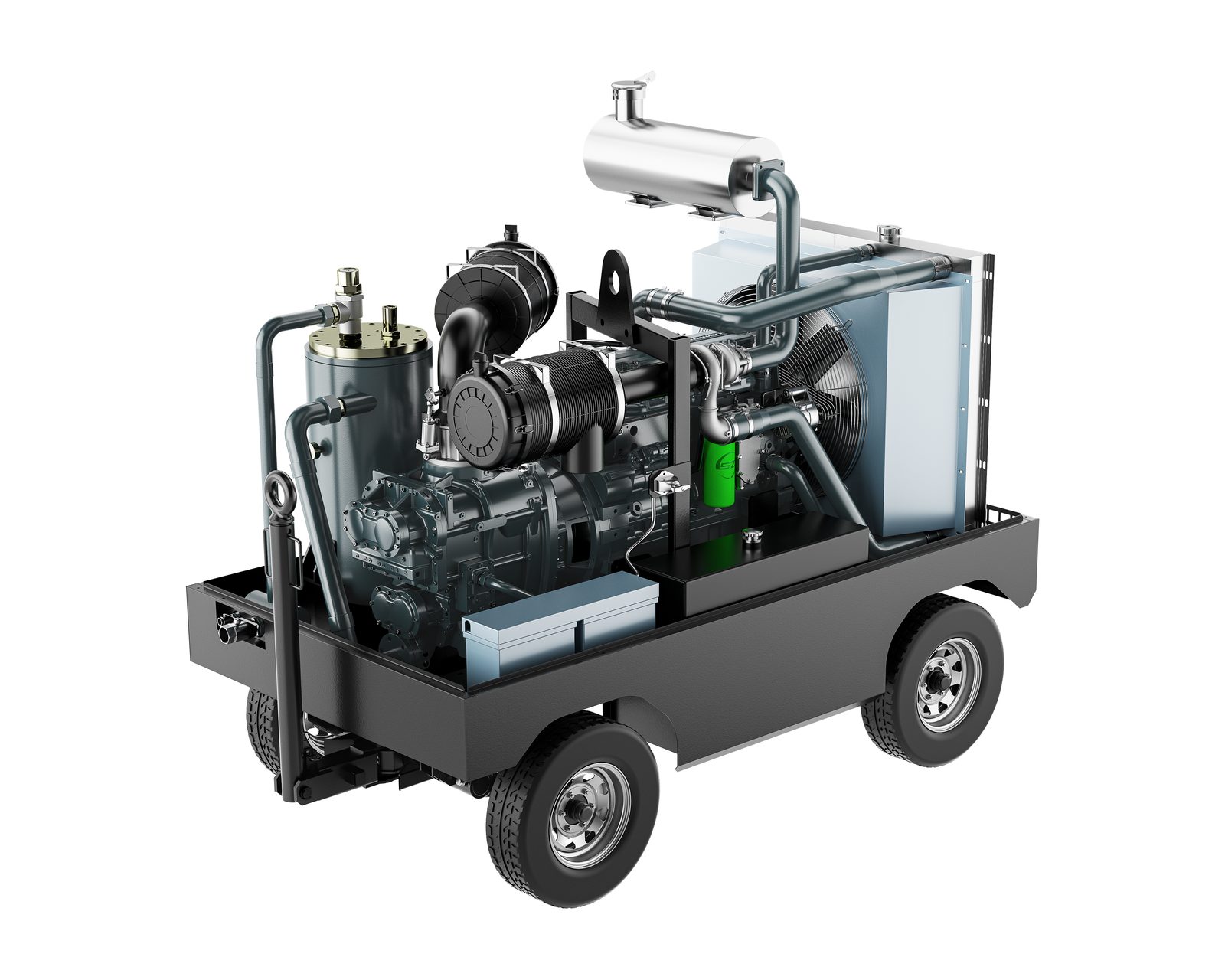
A portable air compressor is a self-contained unit that combines an air end, a prime mover (diesel engine or electric motor), a cooling system, and a control panel inside a compact, towable or skid-mounted frame. Unlike stationary compressors that require a dedicated compressor room, portable units are designed to move. They can be transported by truck, trailer, or crane, and they can start delivering compressed air within minutes of arrival.
This mobility creates three distinct advantages that drive demand across industries:
- Site flexibility — Compressed air can be delivered exactly where the work is happening, eliminating long distribution pipes and the pressure losses that come with them.
- Rapid deployment — A portable unit can support emergency work, short-duration tasks, or multiple phases of a project without permanent installation.
- Asset efficiency — The same machine can be reused across different sites, which is why portable compressors are the backbone of the rental industry.
Diesel vs. Electric: The Two Core Platforms
Modern portable compressors are available in two main configurations, and the choice between them shapes almost every application decision.
Diesel-driven portable compressors carry their own engine, so they operate completely independently of the power grid. This makes them the default choice for remote construction sites, mines, pipeline projects, and any location where electrical infrastructure is unavailable, unreliable, or simply not yet built. A diesel unit can be refueled in minutes, which means it can run around the clock as long as fuel is available. The trade-offs are higher fuel consumption, higher noise levels, and the need for routine engine maintenance alongside compressor maintenance.
Electric-driven portable compressors connect to a local power supply or a site generator. They are quieter, cleaner, and less expensive to operate per hour, and they produce zero exhaust emissions at the point of use. These benefits make electric units increasingly popular for urban construction, indoor projects, tunnel work, and emissions-sensitive environments such as hospitals, airports, and residential districts. Electric units also appeal to rental companies that operate in cities with strict emission regulations.
Neither platform is “better” in absolute terms. The correct choice depends on the application, the site conditions, and the operating economics. The sections below look at each major industry in detail.
Construction Applications
Construction is the largest single market for portable air compressors. From the first excavation to the final coat of paint, compressed air powers tools and processes that would otherwise require heavy electric cables, hydraulic power packs, or manual labor.
Demolition and Breaking
Pneumatic breakers, also known as jackhammers, are among the most common tools connected to a portable compressor. Whether a crew is breaking concrete slabs, removing asphalt, or demolishing old foundations, a 90–185 cfm diesel portable compressor can keep a breaker running continuously for a full shift. Because demolition sites are often unstable and power lines are a hazard, diesel-driven units are typically preferred; they can be positioned away from the work area with hoses routed to the tool, keeping both operators and equipment safer.
Concrete Works
Compressed air plays a central role in modern concrete construction:
- Shotcrete and gunite — Pneumatic spraying of concrete onto tunnel walls, slope surfaces, and swimming pool shells requires a high-volume, high-pressure air supply. Portable compressors deliver the steady flow needed to keep the spray nozzle operating without sputtering.
- Sandblasting and surface preparation — Before coating, welding, or bonding, concrete and steel surfaces must be cleaned. Portable compressors power abrasive blasting equipment that removes rust, paint, and laitance.
- Vibration and consolidation — Pneumatic vibrators help concrete settle into forms and eliminate voids, improving structural integrity.
- Form cleaning and blow-down — Simple blow guns powered by compressed air clean forms, equipment, and work surfaces faster than brushes or water.
Drilling and Piling
Construction drilling covers everything from small anchor holes to deep foundation piles. Rotary drill rigs, down-the-hole (DTH) hammers, and pneumatic drilling tools all require compressed air both to drive the drill and to flush cuttings out of the borehole. The air volume and pressure needed depend on the hole diameter and depth; a foundation contractor may need 300–600 cfm at 100–150 psi, while a light anchor drilling crew can work with a 185 cfm machine. Portable units are ideal because drilling positions move constantly across a site.
Painting and Coating
Industrial painting, line marking, and protective coating applications rely on portable compressors for airless and conventional spray equipment. Portable units let painting crews move through a project in sequence—preparing, priming, and finishing—without being tied to a fixed air line. Oil-free or filtered air is essential for high-quality finishes, so contractors should select a portable compressor with adequate filtration and, where necessary, a dryer.
Utilities and Infrastructure
Water, gas, and telecommunications utilities use portable compressors for pipeline testing, sewer line rehabilitation, cable blowing, and manhole ventilation. In pipeline testing, a compressor pressurizes the line to verify integrity before backfilling. These jobs often take place in roadside trenches and confined spaces, which favors compact, low-emission electric units or diesel units equipped with emission controls.
Mining Applications
Mining is a demanding environment for any equipment, and portable air compressors are no exception. Mines operate in extreme temperatures, dusty atmospheres, and remote locations where service support is scarce. Reliability and ruggedness are therefore the first criteria for compressor selection.
Blast Hole Drilling
Surface mines rely on bench blasting to fragment rock before hauling. The blast holes are drilled with rotary or DTH rigs that need large volumes of compressed air at high pressure—often 350–1,200 cfm at 150–350 psi. Portable diesel compressors are the industry standard for this task because they can follow the drill across the bench without any dependence on site power. The compressor must be robust enough to handle continuous duty, high ambient temperatures, and heavy dust loads, which is why miners favor machines with oversized coolers and heavy-duty filtration.
Underground Operations
Underground mines face a different set of challenges. Space is restricted, ventilation is critical, and diesel exhaust is a serious safety concern. In many underground operations, electric-driven portable compressors are preferred because they eliminate exhaust emissions in confined spaces. Compressed air is used for drilling, rock bolting, scaling, shotcrete application, and powering pneumatic tools in areas where electrical equipment may be a hazard. Because underground air is often humid and abrasive, filtration and condensate management become central maintenance priorities.
Dust Suppression and Dewatering
Mines generate enormous amounts of dust, both from drilling and from haul roads. Portable compressors power misting and fogging systems that suppress dust at crushers, conveyors, and stockpiles. In some operations, compressed air also powers diaphragm pumps used for dewatering sumps and settling ponds. These applications may not demand high pressure, but they do demand sustained, reliable flow, which a correctly sized portable compressor provides.
Exploration and Remote Camp Support
Early-stage exploration projects often operate far from any power grid. Portable diesel compressors support core drilling rigs, camp utilities, and field maintenance for weeks or months at a time. Their self-contained design makes them easy to airlift or truck into remote areas, and their fuel autonomy means they can keep working long after generators have been parked.
The Rental Industry: A Special Case
Rental companies are the quiet giants of the portable compressor market. A rental fleet may hold dozens or hundreds of units, and each machine must be capable of serving completely different customers from one week to the next. This creates a unique set of application requirements.
Fleet Versatility
A rental compressor must be easy to operate, easy to transport, and forgiving of many different user skill levels. Units are typically selected in a range of standard sizes—185, 300, 425, 600, and 750 cfm, for example—so that a customer can rent exactly the capacity their job needs. Features such as automatic start-stop, digital controllers, and simple hose connections reduce operator errors and minimize support calls.
Diesel for Flexibility, Electric for Cities
Most rental fleets are dominated by diesel portable compressors because diesel units can go anywhere and run on any site. However, city construction regulations, low-emission zones, and indoor projects are steadily pushing electric portable compressors into rental catalogs. A well-balanced fleet offers both platforms, letting rental managers match the machine to the customer’s site conditions rather than forcing a one-size-fits-all solution.
Total Cost of Ownership in Rental
For rental companies, the real cost of a compressor is not the purchase price—it is the cost per rental day over the machine’s working life. Fuel consumption, service intervals, downtime, and resale value all matter. Modern diesel engines and high-efficiency screw air ends are designed to reduce fuel burn per cfm, which directly improves the rental margin. At the same time, electric units offer lower hourly operating costs and reduced maintenance, which can make them more profitable on long-term contracts despite a higher initial investment.
Selecting the Right Portable Compressor for Your Application
Whether you are a contractor buying for a specific project, a mine operator standardizing a fleet, or a rental company expanding your catalog, the same selection logic applies. Work through these five steps before making a decision.
1. Define the Required Flow and Pressure
Every pneumatic tool has a rated air consumption (in cfm or m³/min) and a required operating pressure (in psi or bar). Add the consumption of all tools that will run simultaneously, then apply a safety margin of 10–20%. Do not forget the pressure: a DTH drill at 200 psi needs a high-pressure machine, not just a high-volume one.
2. Choose Diesel or Electric Based on Site Reality
Ask three questions: Is grid power available? Are emissions regulated on this site? How long will the machine run per day? If power is absent or unreliable, choose diesel. If emissions, noise, or fuel logistics are the dominant constraints, choose electric. When in doubt, choose the platform that gives you the most operational flexibility for the longest expected period of use.
3. Match the Configuration to the Environment
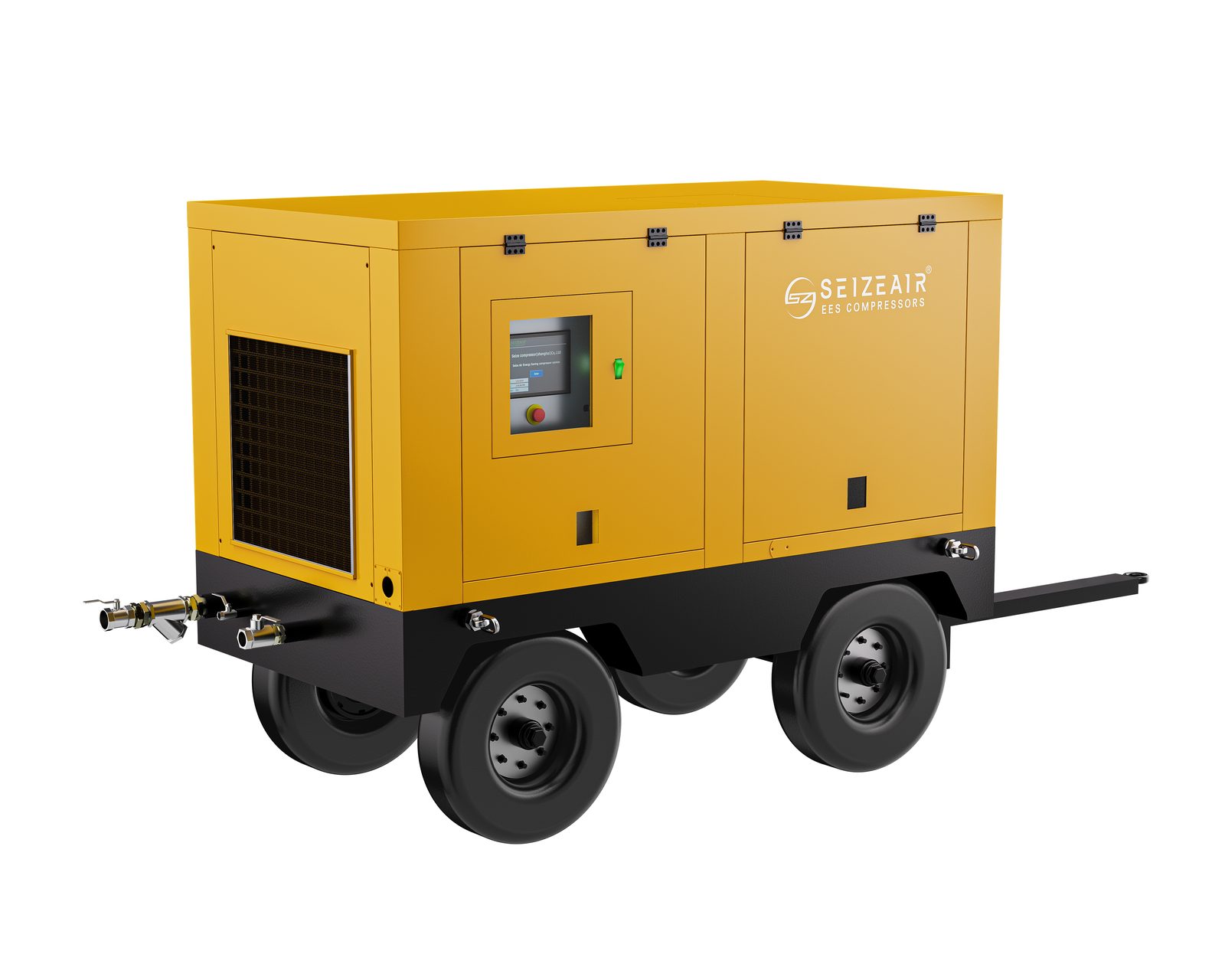
Enclosed, canopy-style units reduce noise and protect components from weather and vandalism, which makes them ideal for rental and urban construction. Open-frame units are easier to service and are common in mining. Skid-mounted units suit permanent or semi-permanent installations, while trailer-mounted units are best for frequent moves between sites.
4. Consider Service and Parts Availability
A compressor that cannot be serviced is worthless on a deadline. Choose a manufacturer with global distribution, common spare parts, and documented maintenance procedures. For international contractors and rental networks, this factor often outweighs small differences in initial price.
5. Plan for the Full Life Cycle
Calculate fuel or electricity consumption, filter costs, oil changes, air-end service intervals, and resale value. A machine that consumes 10% less fuel will repay its purchase premium many times over a five-year working life. Reliable, well-supported equipment also holds its resale value, which is a key consideration for rental fleets.
Maintenance and Reliability on the Job
Portable compressors work in some of the harshest conditions on earth, and their reliability depends on disciplined maintenance. The following practices apply to almost every application.
- Check air filters frequently — Dust is the number-one killer of air ends. On dusty construction and mining sites, inspect and replace intake filters on a fixed schedule, not just when the indicator warns you.
- Monitor oil level and quality — The oil in a rotary screw air end does more than lubricate; it seals and cools. Check levels daily and follow the manufacturer’s oil-change intervals strictly.
- Drain condensate — Water in the air system corrodes piping and damages tools. Drain separators daily and, for critical applications, use a proper dryer.
- Inspect hoses and couplings — A worn hose is a safety hazard and an efficiency loss. Replace damaged fittings before they fail on site.
- Keep the canopy clean — Debris blocking the cooler inlet raises operating temperatures and shortens component life. A quick daily blow-down of the cooling package prevents costly overheating failures.
- Follow break-in procedures — New machines and machines after major service need proper break-in. Skipping this step can permanently reduce the life of the engine and air end.
Trends Shaping the Future of Portable Compressors
Several trends are changing how portable compressors are selected and deployed across construction, mining, and rental.
Electrification is accelerating. Battery technology and improved grid access are making electric portable compressors practical in more locations, while tightening emission rules in Europe, North America, and parts of Asia are pushing diesel machines toward cleaner engines or retirement. Rental companies that add electric options today are positioning themselves for tomorrow’s regulations.
Telematics and remote monitoring. Modern portable compressors can report operating hours, fuel levels, fault codes, and service reminders to a cloud dashboard. For rental fleets, this means proactive maintenance, better utilization, and fewer surprise breakdowns. For mine operators, it means a compressor problem can be diagnosed before a crew is sent to a remote site.
Smarter controls. Digital controllers with automatic start-stop, load-unload management, and pressure optimization reduce fuel consumption by matching output to demand. These features improve both the environmental footprint and the operating economics of every application.
Higher pressure capability. Down-the-hole drilling and specialized construction methods continue to demand higher pressures. Manufacturers are responding with portable compressors that deliver 150–350 psi without sacrificing portability, giving contractors and miners more flexibility with a single machine.
Conclusion
Portable air compressors are the workhorses of modern construction, mining, and rental operations. In construction, they power breakers, shotcrete, sandblasting, drilling, and painting. In mining, they drive blast hole drills, support underground work, suppress dust, and keep remote camps running. In rental, they are flexible, revenue-generating assets that must serve an endless variety of customers and sites.
The key to success is matching the machine to the application. Diesel portable compressors offer total independence from the grid and are indispensable for remote and heavy-duty work. Electric portable compressors deliver clean, quiet, and economical operation for urban, indoor, and emissions-sensitive environments. And in every case, disciplined maintenance, reliable service support, and careful life-cycle planning turn a piece of equipment into a dependable production asset.
Whether you are managing a single project site or a national rental fleet, investing in the right portable air compressor—and maintaining it well—pays back in uptime, safety, and profit for years to come. To compare specifications and find the right model for your operation, explore the full range of portable air compressors at SEIZE AIR. For guidance on sizing, configuration, and service planning, visit sz-portable.com to connect with a team that understands how compressed air performs in the real world.