Introduction
Compressed air is the invisible workhorse of modern industry. From the thunder of jackhammers breaking concrete to the precise spray of a paint gun, pneumatic power drives productivity on job sites across the globe. But not all compressed air solutions are created equal—and in the world of heavy industry, mobility matters.
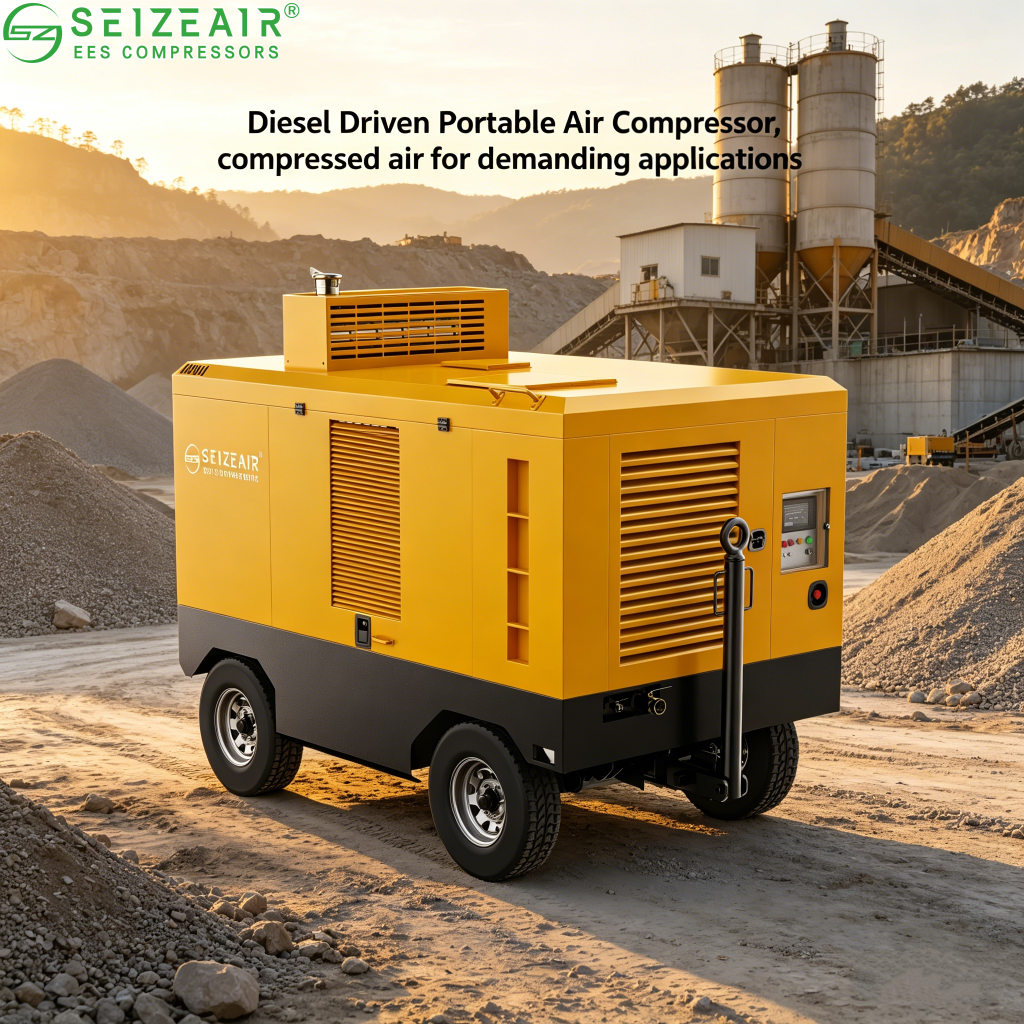
Mobile air compressors have transformed how construction crews, mining operations, and rental fleets approach their work. Instead of dragging hoses across a sprawling job site or setting up fixed compressor stations, teams can now bring reliable, high-output compressed air directly to the point of use. For industries that depend on uptime, portability, and brute-force reliability, the mobile compressor is no longer a luxury—it’s a strategic asset.
In this article, we explore the core industry applications of mobile air compressors, with a focus on diesel-powered portable units. We’ll examine how construction, mining, rental, infrastructure, oil and gas, and emergency response sectors leverage mobile compressed air—and what to look for when selecting a unit for your specific operational demands.
1. Construction: The Backbone of Mobile Compressor Demand
Construction remains the single largest consumer of portable air compressors worldwide. On a typical job site, compressed air powers a diverse range of pneumatic tools and processes, often under harsh, dusty conditions where electric infrastructure may be limited or non-existent.
Core Applications on the Construction Site
Pneumatic Tool Operation. The most straightforward use case: jackhammers, rock drills, chipping hammers, tampers, impact wrenches, and nail guns all require a steady supply of compressed air. A single mobile compressor unit can power multiple tools simultaneously through a manifold setup, reducing the need for separate power sources.
Sandblasting and Surface Preparation. Abrasive blasting demands high-volume, high-pressure air to propel media against surfaces for rust removal, paint stripping, and surface profiling. Mobile compressors in the 185–375 CFM range are the sweet spot for most blasting applications on construction and bridge maintenance projects.
Concrete Cutting and Coring. Diamond-blade concrete saws and core drills often run on compressed air, especially in wet environments where electric tools pose a safety hazard. Mobile compressors enable crews to bring cutting power to remote sections of large pours.
Spraying and Coating. From fireproofing spray to waterproofing membranes, many application systems rely on compressed air for atomization and consistent delivery. Portable units let applicators work across multi-story structures without repositioning stationary equipment.
Utility and Underground Work. Trenching, pipe laying, and underground utility work create confined spaces where diesel exhaust from standalone tools is unacceptable. A mobile compressor positioned at the surface can run pneumatic pumps, ventilation fans, and tools below grade with proper hose management.
Why Diesel Dominates in Construction
Most construction sites lack reliable grid power, especially during early project phases. Diesel-powered portable compressors offer several decisive advantages:
- Fuel autonomy: A full tank delivers 8–12 hours of continuous operation, matching a standard work shift
- High torque at low RPM: Diesel engines handle sudden load spikes—like a jackhammer trigger pull—without stalling
- Rugged durability: Designed for dust, vibration, and temperature extremes from -10°C to 50°C
- No grid dependency: Crews can start work immediately without waiting for temporary power hookups
✅ SEIZE AIR Insight: For mid-size construction crews running 2–3 pneumatic tools simultaneously, a compressor in the 185–260 CFM range at 100–150 PSI covers the vast majority of daily job site needs. Explore our construction-grade mobile compressors at sz-portable.com.
2. Mining and Quarrying: Extreme Duty, Extreme Reliability
Mining environments push equipment to its absolute limits—and portable air compressors are no exception. Whether in open-pit operations or underground tunnels, compressed air plays a mission-critical role in drilling, ventilation, and material handling.
Key Mining Applications
Exploratory and Production Drilling. Pneumatic rock drills remain a staple in both surface and underground mining. Unlike hydraulic alternatives, air-powered drills are simpler to maintain in the field and don’t require extensive fluid management systems. Mobile compressors positioned near the drill face supply the high-pressure air (commonly 100–175 PSI) needed to drive percussion and rotary-percussion drilling rigs.
Underground Ventilation. In tunnelling and underground mining, compressed-air-powered auxiliary ventilation fans move fresh air into dead-end headings and working faces. This application is particularly important in coal mining, where electric motors may pose ignition risks in gassy environments.
Dust Suppression. Water trucks with compressed-air spray systems control fugitive dust on haul roads and at transfer points. Mobile compressors provide the atomizing pressure that turns water into a fine mist capable of capturing airborne particulates.
Blasting Preparation. Before a blast, compressed air cleans drill holes of cuttings and water, ensuring optimal explosive loading. Post-blast, air is used to clear loose rock and ventilate the area.
What Mining-Fleet Compressors Demand
Mining applications differ from general construction in three critical ways:
| Requirement | Why It Matters |
|---|---|
| Higher duty cycles | Mining operates 24/7; compressors must sustain 75–90% load factors without thermal derating |
| Filtration excellence | Silica dust and mineral particulates are engine and compressor killers; multi-stage air/oil filtration is non-negotiable |
| Altitude compensation | Open-pit mines at 3,000–5,000m above sea level require turbocharged engines with altitude-compensating fuel systems |
| Service accessibility | Canopy designs that allow quick access to filters, oil dipsticks, and drain valves minimize downtime in remote locations |
✅ SEIZE AIR Insight: For mid-size construction crews running 2–3 pneumatic tools simultaneously, a compressor in the 185–260 CFM range at 100–150 PSI covers the vast majority of daily job site needs. Explore our construction-grade mobile compressors at sz-portable.com.
2. Mining and Quarrying: Extreme Duty, Extreme Reliability
Mining environments push equipment to its absolute limits—and portable air compressors are no exception. Whether in open-pit operations or underground tunnels, compressed air plays a mission-critical role in drilling, ventilation, and material handling.
Key Mining Applications
Exploratory and Production Drilling. Pneumatic rock drills remain a staple in both surface and underground mining. Unlike hydraulic alternatives, air-powered drills are simpler to maintain in the field and don’t require extensive fluid management systems. Mobile compressors positioned near the drill face supply the high-pressure air (commonly 100–175 PSI) needed to drive percussion and rotary-percussion drilling rigs.
Underground Ventilation. In tunnelling and underground mining, compressed-air-powered auxiliary ventilation fans move fresh air into dead-end headings and working faces. This application is particularly important in coal mining, where electric motors may pose ignition risks in gassy environments.
Dust Suppression. Water trucks with compressed-air spray systems control fugitive dust on haul roads and at transfer points. Mobile compressors provide the atomizing pressure that turns water into a fine mist capable of capturing airborne particulates.
Blasting Preparation. Before a blast, compressed air cleans drill holes of cuttings and water, ensuring optimal explosive loading. Post-blast, air is used to clear loose rock and ventilate the area.
What Mining-Fleet Compressors Demand
Mining applications differ from general construction in three critical ways:
| Requirement | Why It Matters |
|---|---|
| Higher duty cycles | Mining operates 24/7; compressors must sustain 75–90% load factors without thermal derating |
| Filtration excellence | Silica dust and mineral particulates are engine and compressor killers; multi-stage air/oil filtration is non-negotiable |
| Altitude compensation | Open-pit mines at 3,000–5,000m above sea level require turbocharged engines with altitude-compensating fuel systems |
| Service accessibility | Canopy designs that allow quick access to filters, oil dipsticks, and drain valves minimize downtime in remote locations |
3. Rental and Leasing: The Multi-Application Compressor
The equipment rental industry is one of the fastest-growing channels for mobile air compressors. Rental companies need units that can serve the broadest possible customer base—from a homeowner renting a compressor for a weekend painting project to a contractor needing reliable air for a six-month infrastructure contract.
What Rental Companies Look For
Versatility First. A rental-ready compressor should handle pressures from 80 to 175 PSI, with adjustable output to match different tools. Units with tool-selector dials or digital pressure regulation are preferred because they reduce customer confusion and equipment abuse.
Towable Configurations. Most rental compressors are trailer-mounted with highway-rated running gear (lights, brakes, safety chains) to enable customer towing behind a standard pickup truck. Single-axle designs under 3,500 lbs GVWR are particularly popular because they fall below CDL/licensing thresholds in most markets.
Idiot-Proof Controls. Rental customers range from experienced operators to first-time users. Intuitive control panels with clearly labeled gauges, color-coded pressure zones, and automatic shutdown protections (low oil, high temperature, low fuel) reduce callbacks and equipment damage.
Dual-Pressure Capability. Units offering selectable pressure modes—for example, 100 PSI for general tools or 150 PSI for blasting—let one compressor serve multiple customer segments without rental yard reconfiguration.
Rental Fleet Economics
A well-specified mobile compressor typically achieves payback within 18–24 months in a rental fleet, assuming 65% utilization. Key levers that improve ROI include:
- Fuel efficiency: Modern Tier 4/Stage V diesel engines can reduce fuel costs by 15–20% compared to older platforms
- Service intervals: 500-hour oil change intervals vs. 250-hour intervals mean fewer service bay visits and more billable days
- Residual value: Units with hot-dip galvanized chassis, powder-coated canopies, and globally recognized engine brands (Cummins, Kubota, Deutz) hold resale value better
Tunnel Boring Support. Even with modern TBM (tunnel boring machine) technology, supporting operations—grout pumping, shotcrete spraying, rock bolt installation—frequently rely on mobile compressor fleets staged at the portal or within the tunnel.
5. Oil and Gas: Remote-Site Compressed Air
Oil and gas operations present unique challenges: extreme remoteness, hazardous area classifications, and the need for equipment that starts reliably after weeks of idle exposure.
Upstream and Midstream Applications
Well Servicing and Workovers. During well intervention operations, compressed air powers pneumatic wrenches, impact tools, and valve actuators on the wellhead. Air-driven tools are preferred over electric in potentially explosive atmospheres where spark risk must be eliminated.
Pipeline Construction and Testing. Pipeline crews use mobile compressors for pneumatic trenching tools, coating application, and most critically, pipeline pressure testing (hydrostatic or pneumatic). Test pressures often exceed 200 PSI, requiring high-pressure compressor configurations or boosters.
Seismic Exploration. In onshore seismic surveys, portable compressors power the vibrator trucks or provide air for drill rigs that place geophone holes. These operations move continuously across terrain, making true portability essential.
Remote Camp Support. At remote drilling camps, mobile compressors serve as utility air sources for maintenance shops, tire inflation, equipment cleaning, and even pneumatic water pumps for camp supply.
6. Emergency Response and Disaster Recovery
When disasters strike, mobile air compressors become first-response assets. Their ability to deliver power without grid electricity makes them invaluable in the critical 48–72 hours after an event.
Emergency Applications
Search and Rescue. Pneumatic breaching tools, lifting bags, and concrete-cutting saws used in urban search and rescue (USAR) all require compressed air. Mobile units deployed with response teams enable operations to begin before local infrastructure is restored.
Flood Response. After flooding, compressed-air-powered submersible pumps drain basements, tunnels, and low-lying areas. Mobile compressors stationed on high ground feed air lines into flooded zones without electrical hazard.
Debris Clearance. Post-hurricane and post-earthquake debris clearance relies on pneumatic chainsaws, demolition tools, and impact hammers—all air-hungry tools that mobile compressors can support in grid-down scenarios.
Temporary Shelter Support. In refugee camp or field hospital setups, mobile compressors power pneumatic tent erection systems, air-conditioning units, and medical air systems.
7. Comparing Diesel vs. Electric Mobile Compressors by Application
While diesel dominates heavy construction and mining, electric portable compressors are gaining ground in specific niches. The table below maps each technology to its optimal applications:
| Application | Diesel | Electric | Rationale |
|---|---|---|---|
| Remote construction (no grid) | ✅ Best | ❌ Impractical | Grid availability zero; diesel fuel logistics are manageable |
| Urban/Downtown construction | ✅ Good | ✅ Best | Noise regulations and zero-emission zones favor electric |
| Underground mining | ✅ Best | ⚠️ Limited | Diesel needs ventilation management; electric limited by cable length |
| Rental fleet (general purpose) | ✅ Best | ✅ Emerging | Customers expect diesel range; urban rental yards adding electric |
| Tunnel boring support | ✅ Best | ✅ Good | Diesel dominant due to long shifts; electric growing in urban TBMs |
| Emergency response | ✅ Best | ❌ Poor | Grid likely down; diesel autonomy critical |
| Indoor/warehouse work | ❌ Unsafe | ✅ Best | Diesel exhaust unacceptable indoors |
| Pipeline testing | ✅ Best | ❌ Poor | Remote locations with no power access |
The market is trending toward a hybrid approach: diesel for primary high-demand applications, with electric units filling the urban and indoor niches where zero emissions and low noise are regulatory requirements.
2. Duty Cycle and Runtime
Will the compressor run 4 hours a day for occasional tasks, or 20 hours a day in a three-shift mining operation? High-utilization environments demand industrial-duty components: cast-iron compressor blocks (not aluminum), heavy-duty bearings, and engines rated for continuous prime power.
3. Portability and Transport
How will you move the unit between sites? Options include:
- Towable single-axle: Under 3,500 lbs, towable by pickup truck, ideal for rental and small crews
- Towable tandem-axle: 3,500–10,000 lbs, for larger CFM units, requires larger tow vehicle
- Skid-mounted: For fixed installations or crane-lifted deployment on offshore platforms and barges
- Utility/van mounted: Integrated into service trucks for utility and municipal fleets
4. Environmental and Regulatory
Emissions regulations vary dramatically by region. Key considerations:
- North America: EPA Tier 4 Final required for new engines above 25 HP
- Europe: EU Stage V with particulate filters for engines 19–56 kW
- Middle East / Africa / Southeast Asia: Typically Tier 3 or equivalent, with regional variations
- Urban low-emission zones: Growing number of cities (London, Paris, Tokyo) require zero-tailpipe-emission equipment in designated zones—electric compressors only
5. After-Sales Support and Parts Availability
A compressor is only as good as the support network behind it. Before committing to a brand, verify:
- Local dealer or distributor presence in your operating region
- Parts availability for both the engine (Cummins, Kubota, Deutz, etc.) and the compressor end (airend)
- Warranty terms—industry standard is 12 months / 2,000 hours, with some manufacturers offering extended coverage
- Technical documentation and training availability for your maintenance team
9. The SEIZE AIR Advantage for Global Applications
SEIZE AIR designs and manufactures mobile air compressors specifically for the demanding environments described in this article. Our engineering philosophy is built on three pillars:
Application-Driven Design. We don’t build a single compressor and hope it fits everywhere. Our product lines are segmented by application: construction-grade units with optimized tool-matching, mining-spec compressors with enhanced filtration and duty-cycle ratings, and rental-ready configurations with simplified controls and highway tow kits.
Global Compliance. With distribution across 60+ countries, our compressors are available in EPA Tier 4 Final, EU Stage V, and Tier 3 configurations to match your regional regulatory environment.
Proven Powertrain Partnerships. We integrate engines from Cummins, Kubota, and Deutz—brands with global service networks that ensure your compressor can be maintained anywhere in the world.

Conclusion
Mobile air compressors are not a one-size-fits-all commodity—they are operational force multipliers whose value depends entirely on matching the right unit to the right application. Construction crews need rugged autonomy, mining operations demand extreme-duty reliability, rental fleets require versatility and simplicity, and emergency responders count on instant readiness when everything else is down.
Whether you’re expanding a rental fleet, equipping a new construction project, or upgrading aging mining assets, the principles outlined in this guide will help you navigate the selection process with confidence.
To explore SEIZE AIR’s full range of diesel and electric mobile air compressors—from 185 CFM utility units to 1,600 CFM high-pressure models—visit our product page or contact our application engineering team for a site-specific recommendation.