Topic: Hidden Costs in Manufacturing | Craft: Data-Driven Analysis | Challenge: The Overlooked Energy Vampire
In the relentless pursuit of efficiency, manufacturers obsess over robot uptime, CNC speeds, and lean inventory. We spend billions on automation, yet a silent, 24/7 energy vampire sits in the corner of almost every factory, often the single largest electricity consumer. We’re talking, of course, about the compressed air system.
According to the U.S. Department of Energy, compressed air systems account for roughly 10% of all industrial electricity consumption, and a staggering 50% of that energy is wasted. In a typical manufacturing plant, the air compressor alone can consume more power than lighting, HVAC, and all other utilities combined. If you’re not actively managing this, you’re literally venting money into the atmosphere.
I’ve spent years inside factories, from tier-1 automotive suppliers to food processing plants. The pattern is always the same: a massive, aging, inefficient compressor running 8,760 hours a year, patched together with leaks and questionable piping. The "solution" is usually to buy another cheap machine. That’s the mistake.
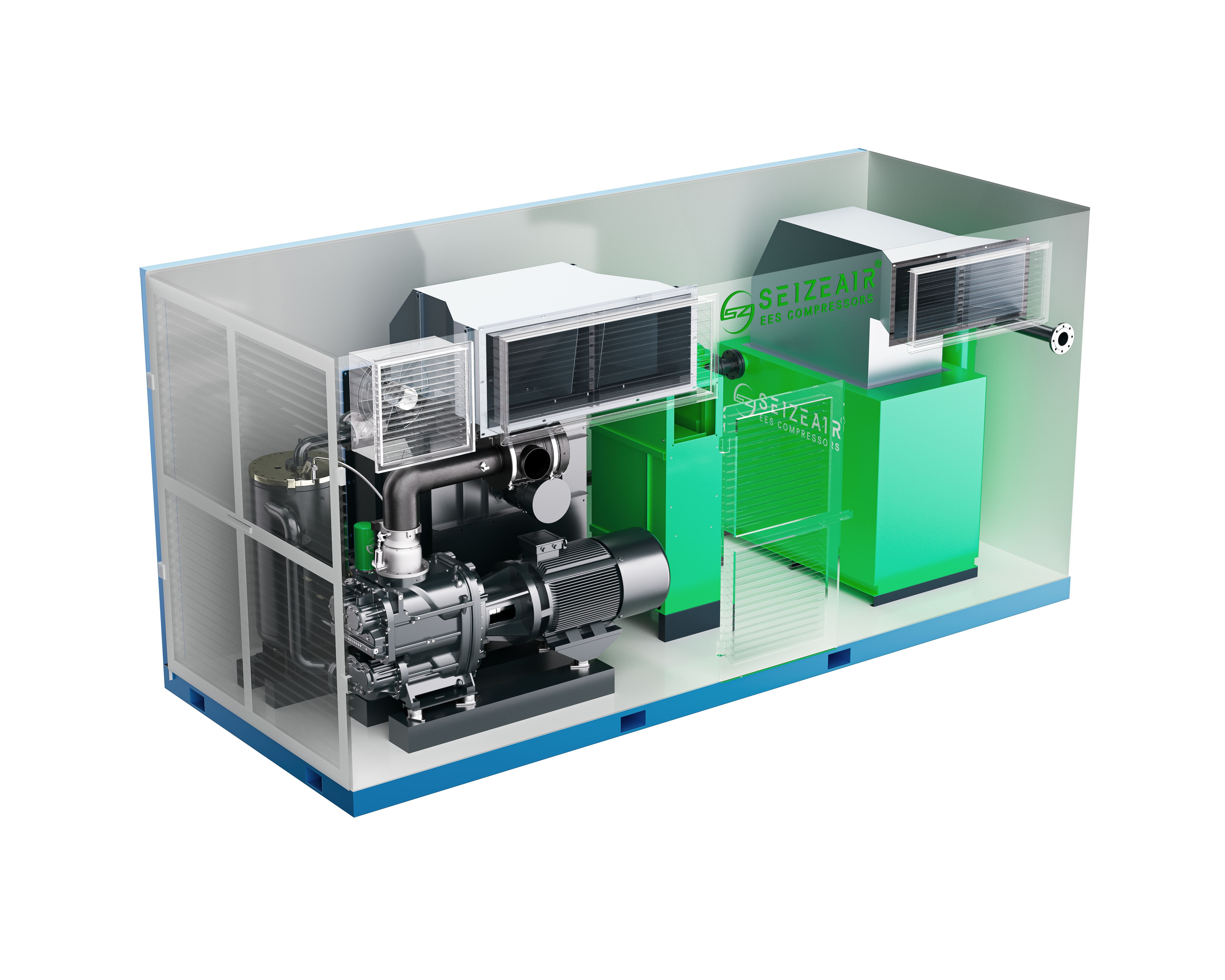
Here is the hard data and the practical roadmap to stop the bleed, based on real-world case studies and proven technology.
Point 1: The "Leak Tax" – You Are Paying for Air You Are Not Using
The Data: A single 1/4-inch hole at 100 PSI leaks $8,000 to $12,000 per year in wasted energy. Most factories have dozens, even hundreds, of these leaks. The average unmanaged system leaks 20-30% of its total output. For a plant with a 500 HP system running at $0.10/kWh, that’s a $100,000 to $150,000 annual "Leak Tax."
The Case Study: We audited a plastics injection molding factory in Ohio. They had a 400-horsepower (HP) rotary screw system, running 24/7. The plant manager thought their biggest problem was the tooling. After a 3-day ultrasonic leak detection audit, we found 187 leaks. The cost? $182,000 per year. They had been paying for two compressors, but one was just cycling to cover the leaks.
My View: Most companies have a "leak detection program." It’s a poster in the break room. It’s not a system. Leaks are physical entropy. They don't fix themselves.
The Actionable Strategy (The Leak Audit Protocol):
Ultrasonic Detection: Buy a quality ultrasonic leak detector ($1,500). Don't use soap bubbles. Train one maintenance tech to do a systematic walk-around once per month. Mark every leak with a red tag.
The "Tag-Out/Fix-Out" Rule: For every red tag identified, the shift supervisor must fix it within 48 hours or justify why it cannot be fixed. No exceptions.
Reduction Target: Set a KPI. Aim to reduce total system leakage from 25% to under 5% within 12 months. That is a direct, bottom-line savings of 20% of your total electrical bill for air.
Point 2: The "Wrong Horse" Problem – Not All Compressors Are Created Equal
The Data: A standard fixed-speed, 100 HP compressor running at 80% load might consume 75 kW. An IE5-rated, variable-speed drive (VSD) permanent magnet synchronous motor system, like those engineered by SEIZE AIR COMPRESSOR, running at the same 80% load, might consume only 55-60 kW. That’s a 25-30% reduction in energy consumption before you even address leaks. Over 8,000 hours, that’s a savings of 120,000 kWh – or $14,400 per year for just one unit.
The Case Study: A mid-sized metal fabrication shop in Texas had a 200 HP fixed-speed Ingersoll Rand system. They replaced it with two 150 HP SEIZE AIR VSD units (parallel system). The plant load varied wildly. On weekends, they ran at 15% of capacity. The new system, with its "containerized air station" design (a pre-piped, pre-wired unit that was installed in one day), automatically shed load.
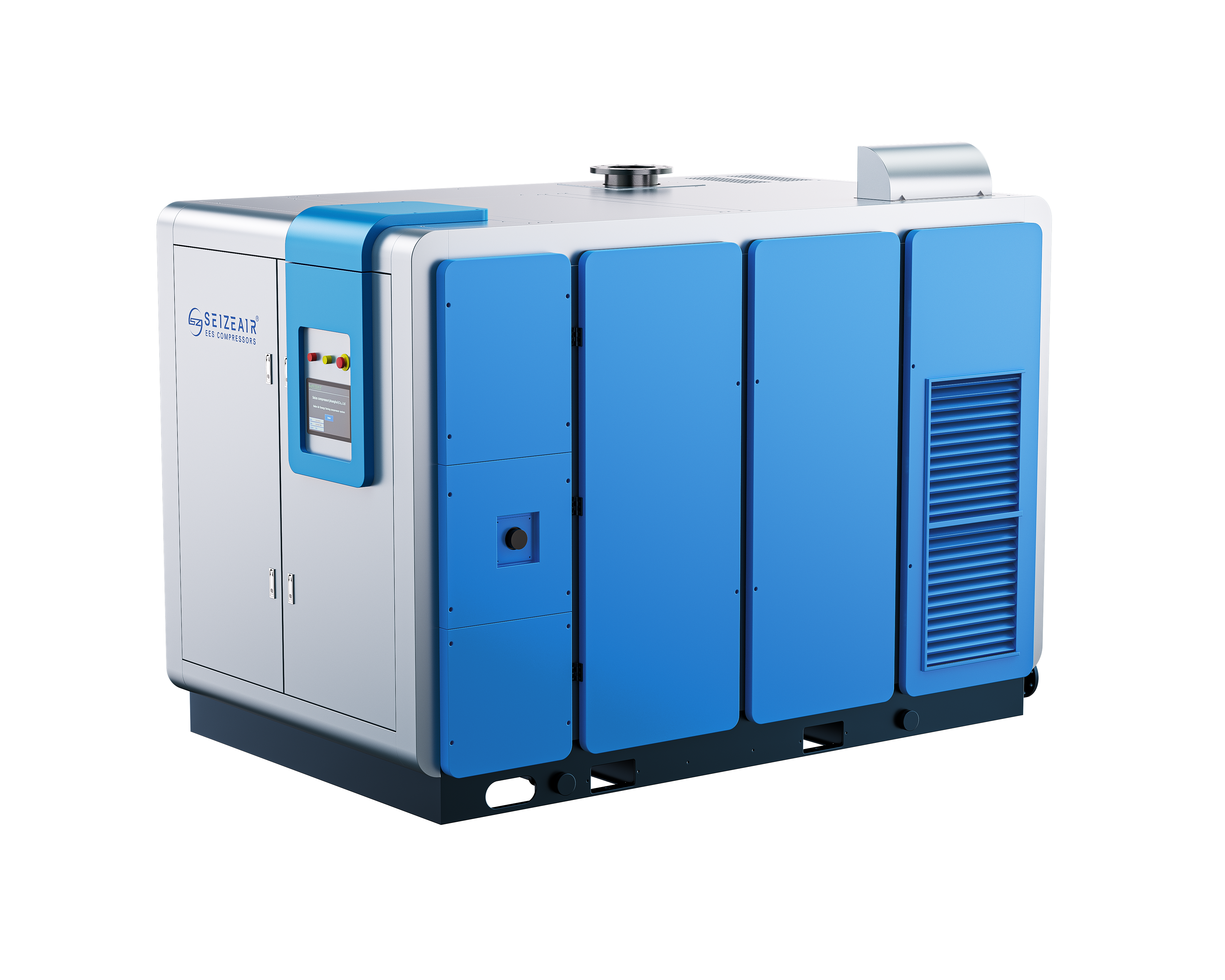
The Data: Their specific power (kW/100 cfm) dropped from 23 to 15. That’s a 38% reduction in their compressed air energy bill. Payback on the investment was under 18 months. They also eliminated downtime related to the old system's complex control system.
My View: Don't buy a compressor. Buy a compressed air power plant. The hardware is only part of the equation. The efficiency curve is critical. A cheap machine might have a small peak efficiency, but its efficiency drops dramatically outside of a narrow band. A modern, high-quality VSD system maintains high efficiency across a 20-100% load range.
The Actionable Strategy (The Efficiency Upgrade Decision):
The 3-Point Test: Measure your peak demand, average demand, and minimum demand. If your system is oversized by more than 20% (average load vs. peak load), a VSD upgrade is a no-brainer.
Don't Just Swap: Consider the total cost of ownership (TCO) over 10 years. The purchase price is 5-10% of the TCO. The energy cost is 70-80%. A cheaper compressor will cost you more.
The "Zero-Capex" Option: Explore Contract Energy Management (EMC) models. Companies like SEIZE AIR offer a "sell air" model. They install the system for free. You pay only for the cubic feet of air you use. They have a direct financial incentive to make the system as efficient as possible.
Point 3: The "Dirty Air" Disaster – What You Can't See Costs You
The Data: Most manufacturing environments require ISO Class 1.4.1 compressed air (oil content < 0.01 mg/m³). If your air is "wet" (high dew point) or has oil carryover, it ruins bearings, clogs valves, and contaminates products. A single oil-lubricated screw compressor that is not performing can cost you $50,000 in re-jet costs on a single production line, not to mention scrap rates on sensitive products like electronics or food.
The Case Study: A medical device plant in California was using a standard oil-lubricated compressor. They had a persistent issue with an oily residue on their components. They tested the air and found oil carryover was 5 ppm instead of the required<0.01 ppm. They switched to a Class 0 certified SEIZE AIR oil-free compressor. The result? Immediate reduction in scrap rate from 0.8% to 0.05%. The savings from reduced rework and scrapped parts paid for the new compressor in 11 months.
My View: Compressed air is a "utility" like water. But unlike water, you can’t see the contamination. It’s a hidden quality killer. If your filters are clogged, the pressure drop across them increases, forcing the compressor to run harder, wasting energy AND lowering air quality.
The Actionable Strategy (The Air Quality Audit):
The "Shiny Surface" Test: Put a piece of white filter paper or a glass slide in the air stream for 10 minutes. If you see any oil, it’s a problem.
The Dew Point Check: Measure the dew point at the point of use. If it’s above -20°C for general dry air, your dryer is undersized or faulty. A 10°C rise in ambient temperature can increase the cost of drying air by 15%.
The "Pressure Drop" Rule: For every 2 PSI of pressure drop across a filter, you waste 1% of the energy of the compressor. If your filters are 10 years old, replace them. It’s the cheapest energy efficiency upgrade you can do.
Point 4: The "System" Is the Solution – Integration is Everything
The Data: A properly designed centralized system with a master controller can reduce energy consumption by 15-25% compared to a group of standalone, uncommunicating machines. The typical unmanaged system runs two compressors, where one alone could handle the load 70% of the time.
The Case Study: A large brewery in Colorado had four 200 HP compressors running independently. They were constantly fighting each other. They installed a SEIZE AIR "Smart Controller" that integrated all four units. The system learned their load profile (high during the day, low at night). It now runs only one unit 60% of the time. They saved $140,000 per year.
The Actionable Strategy (The System Integration Checklist):
The "Turn It Off" Test: On a typical weekend, walk your plant floor. How many air valves are open? Is the compressor even running? If it is, and there’s no production, you have a massive leak or a system problem.
The Control Strategy: Don't just buy a compressor. Specify the controller. Demand a sequence controller that can optimize the start-up and shut-down of multiple units based on real-time demand, not just pressure.
The "Future-Proof" Design: Choose a system that is modular and scalable. A containerized air station is a fantastic solution for growing facilities. You can plumb it in, power it on, and it’s instantly a complete plant utility. It’s a "factory within a factory" that is easy to replicate.
The Final Verdict: The $1 Million Mistake
If you are a manufacturing leader and you are not actively auditing your compressed air system, you are leaving between $1 and $3 per HP per year on the table. For a 500 HP plant, that’s $500,000 to $1.5 million of pure profit.
The technology is here. The data is clear. The question is whether you will treat compressed air like the high-leverage, high-ticket utility it is, or continue to let it be the silent killer in your energy budget.
The best compressors in the world, like the IE5-rated SEIZE AIR systems, are no longer just machines. They are energy management platforms. They monitor themselves, they predict failure, and they optimize for the lowest cost per cubic foot.
Stop venting money. Audit your system. Fix the leaks. Upgrade the engine. The ROI is real, and it starts next month.