Introduction
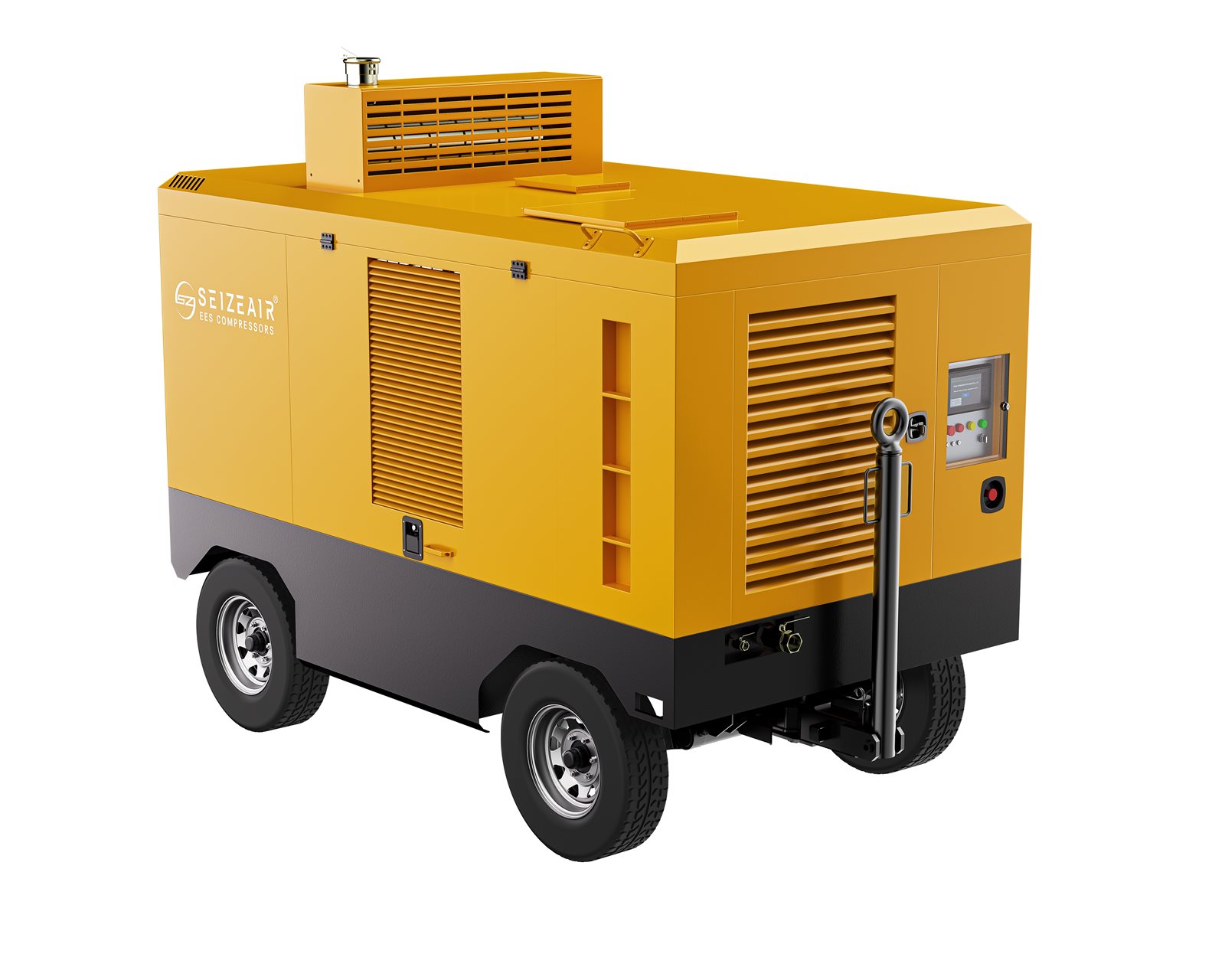
Portable air compressors are the workhorses of construction sites, mining operations, and equipment rental fleets around the world. A diesel or electric mobile compressor can power rock drills, pneumatic breakers, sandblasting equipment, and dozens of other tools that keep projects moving. But like any hard-working machine, a portable compressor only performs when it is properly maintained.
Skipping maintenance might save an hour today, but it almost always costs days of downtime tomorrow. A neglected air end can fail at a fraction of its rated life. A clogged filter can push operating temperatures past safe limits and trigger expensive shutdowns. In the rental business, an unreliable unit does not just lose revenue — it loses customers.
This guide provides a practical, schedule-based maintenance checklist for portable and mobile air compressors, covering both diesel-driven and electric-powered units. Whether you own a single machine for a contracting business or manage a fleet of rental compressors, following this routine will extend equipment life, reduce fuel and energy consumption, and keep your operation running at maximum availability.
Why Preventive Maintenance Matters for Portable Compressors
Portable compressors operate in some of the harshest environments imaginable: dusty quarries, muddy construction sites, humid coastal areas, and freezing winter projects. They are transported over rough roads, jolted on trailers, and run for long hours at full load. These conditions place unique stress on every component.
Preventive maintenance delivers three measurable benefits:
- Reduced downtime. The most expensive compressor failure is the one that stops a job site. Planned maintenance catches small problems while they are still cheap to fix.
- Longer service life. A well-maintained air end can deliver 20,000 to 40,000 hours of service. A neglected one may fail in a fraction of that time.
- Lower operating cost. Clean filters, correct oil levels, and properly tensioned belts keep fuel consumption and electricity use at their designed minimum.
Maintenance is also a safety issue. A worn safety valve, a cracked hose, or an over-pressurized receiver tank can cause serious injury. Regulatory inspections in many countries require documented maintenance and pressure vessel testing. A simple logbook can protect your team, your equipment, and your legal position.
Daily Maintenance Checks: Before Every Start
The daily inspection takes only five to ten minutes and prevents the majority of field failures. Make it a non-negotiable part of your start-up routine.
1. Engine and Compressor Oil Levels
Check the engine oil level with the dipstick before starting, especially for diesel-driven units. Check the compressor oil level in the sight glass on the air end. Low oil is the number one cause of premature air end failure. Top up with the correct grade of oil specified in the manual — never mix different brands or viscosities.
2. Fuel and Coolant Levels
For diesel models, confirm there is enough fuel for the planned work shift. Running a diesel engine dry not only causes downtime but can also damage the fuel injection system. Check the coolant level in the radiator overflow tank while the engine is cold.
3. Visual Leak Check
Walk around the machine and look for oil, fuel, or coolant leaks on the ground and on the compressor body. Listen for air leaks at hose connections and fittings when the machine is running. Even a small leak wastes energy and indicates a fitting that will eventually fail.
4. Air Filter Restriction Indicator
Most portable compressors are fitted with a vacuum gauge or restriction indicator on the air intake filter. A reading in the red zone means the filter element is clogged and should be cleaned or replaced before the unit works hard.
5. Belts and Guards
Inspect drive belts for visible cracking, glazing, or slack. Ensure all safety guards are in place and secure. Never run the compressor with a guard removed.
6. Instrument Panel Readings
Start the unit and let it warm up. Confirm that operating pressure builds normally, oil pressure is within range, and discharge temperature stays below the manufacturer’s limit. Record the readings in your daily log if the unit is part of a fleet.
7. Safety Valve and Condensate
Verify that the pressure relief valve is not leaking and moves freely. Open the condensate drain on the receiver tank and water separator after warm-up to release accumulated moisture.
Weekly Maintenance Tasks
Once a week, or every 40 to 50 operating hours, add the following checks to your routine:
- Inspect the air filter element. Tap it gently to remove loose dust. Replace it if it is damaged, oily, or heavily loaded. In extremely dusty environments, check it more often.
- Drain condensate thoroughly. Open all drain points — receiver tank, moisture separator, and aftercooler — to remove water and oil emulsion that can corrode the system.
- Clean the radiator and oil cooler fins. Blow dust and debris out with compressed air or low-pressure water, directing the flow against the normal direction of airflow. Blocked coolers are the most common cause of overheating in mobile units.
- Check wheels, tires, and tow bar. For towable units, verify tire pressure, lug nut torque, and the condition of the tow coupling, safety chains, lights, and brake connections.
- Inspect hoses and couplings. Look for cracks, bulges, and worn threads on air hoses and quick couplings. Replace any hose showing signs of degradation.
- Tighten loose fasteners. Vibration loosens bolts on skids, panels, and brackets. Walk around with a suitable wrench and snug up anything that has worked loose.
Monthly Maintenance Tasks
Monthly service, typically every 200 operating hours, covers items that wear more gradually:
- Clean or replace the air filter element. Compare the element against the replacement interval in your manual. A clean filter reduces fuel consumption and protects the air end from abrasive dust.
- Inspect the oil separator element. A high pressure drop across the separator, or excessive oil carryover in the discharge air, indicates a separator that needs replacement.
- Check electrical connections. For electric-powered units, inspect the motor starter, cables, and terminals for corrosion, heat discoloration, or loose connections. For diesel units, check the battery terminals and alternator output.
- Grease fittings and moving parts. Apply the recommended grease to hinge points, door latches, and any other lubrication points specified by the manufacturer.
- Test all safety and shutdown devices. Confirm that high-temperature shutdown, low-oil shutdown, and overload protection functions operate correctly.
- Check vibration mounts and anti-vibration pads. Loose or degraded mounts accelerate wear on the air end and engine.
Quarterly and 500-Hour Maintenance
At roughly 500 operating hours, or every three months under normal use, schedule a more thorough service:
- Change the engine oil and oil filter (diesel models). Use the oil grade recommended for your ambient temperature range. This is the single most important task for engine longevity.
- Change the compressor oil and oil filter (if applicable). Follow the manufacturer’s interval for your compressor type and operating conditions.
- Replace the oil separator element if your quarterly inspection shows signs of wear or the interval is reached.
- Check and adjust belt tension. Belts should deflect about 10 to 15 mm under moderate thumb pressure at the midpoint. Replace worn belts in matched sets.
- Clean the oil cooler and aftercooler thoroughly. Remove the cooler if necessary and flush both the air side and oil side according to the manual.
- Inspect the pressure system. Check the receiver tank, piping, and fittings for corrosion, pitting, and thinning metal. Note any concerns for the annual inspection.
Annual and 2,000-Hour Maintenance
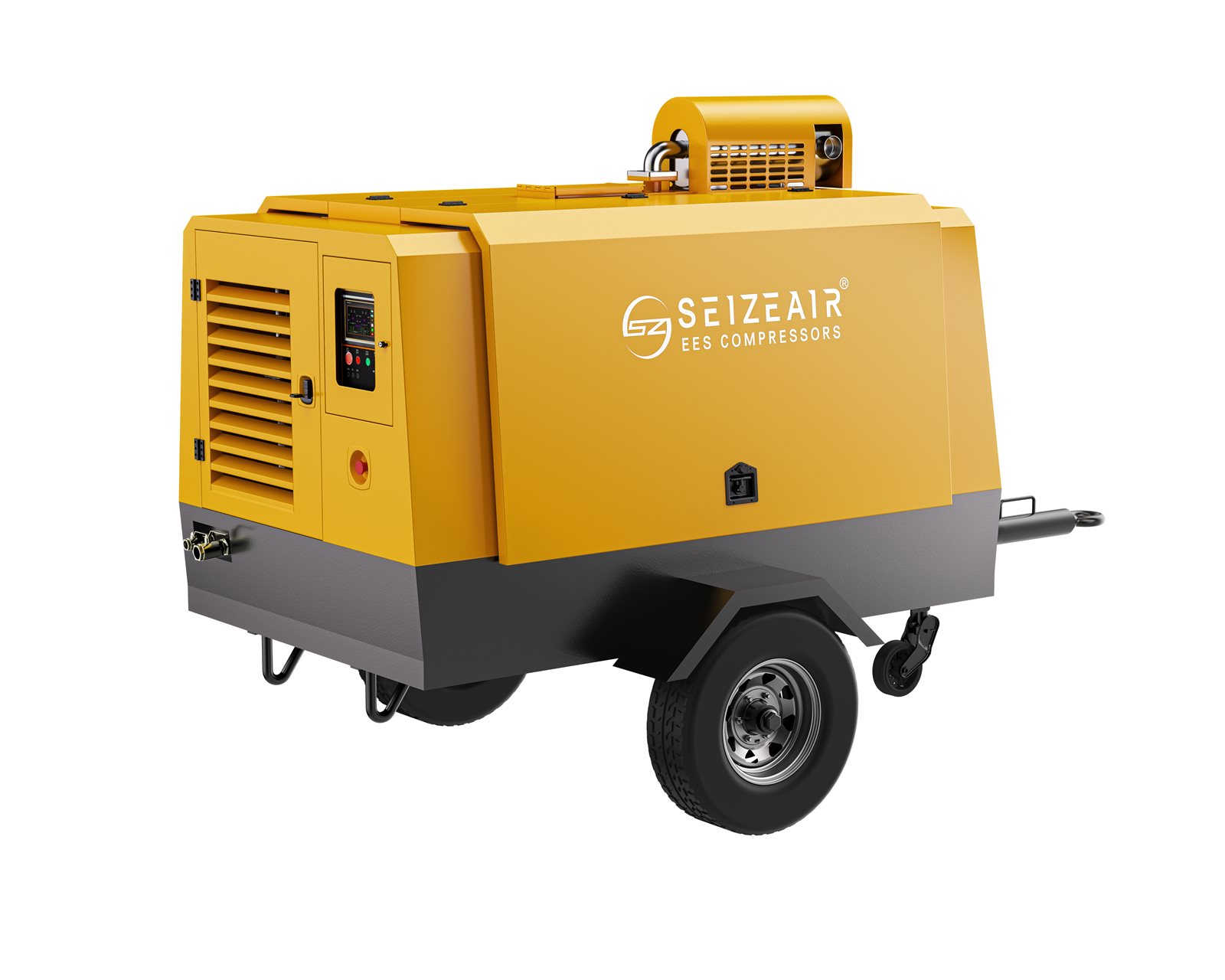
Once a year, or every 2,000 operating hours, the compressor deserves a comprehensive service, ideally performed by a qualified technician:
- Complete fluid change. Drain and replace engine oil, compressor oil, and coolant. Flush the cooling system if the coolant shows contamination.
- Replace all filter elements. Air filter, oil filter, fuel filter, and separator elements should all be renewed.
- Inspect the air end. Check bearing condition, coupling alignment, and shaft seal for leaks. If the air end shows high vibration or noise, schedule a professional overhaul.
- Test the safety valve and pressure gauges. Have relief valves tested or replaced, and verify gauge accuracy against a calibrated reference.
- Pressure vessel inspection. Comply with local regulations for receiver tank inspection and certification. This is a legal requirement in most countries.
- Check the trailer and running gear. Inspect wheel bearings, brakes, suspension, and the tow coupling. Repack bearings if recommended for your axle type.
- Update the maintenance log. Record all work performed, parts replaced, and hours on the machine. This documentation adds value at resale and supports warranty claims.
Diesel vs. Electric Portable Compressors: What Changes in Maintenance?
The maintenance fundamentals are similar for diesel and electric portable compressors, but the differences matter:
| Maintenance Area | Diesel-Driven Units | Electric-Powered Units |
|---|---|---|
| Oil changes | Engine oil + compressor oil | Compressor oil only |
| Fuel system | Fuel filters, injectors, fuel quality | Not applicable |
| Cooling | Radiator for engine + oil cooler | Electric fan + oil cooler |
| Electrical | Battery, alternator, starter | Motor, starter, VFD (if fitted), cables |
| Emissions systems | DPF / aftertreatment (newer engines) | Not applicable |
| Daily checks | Fuel, coolant, oil, batteries | Power supply, motor cooling, cables |
| Major overhaul | Engine overhaul at 8,000–12,000 h | Motor is generally low-maintenance |
Diesel units carry more maintenance complexity because the engine is a second machine with its own service needs. However, they offer complete independence from the electrical grid, making them ideal for remote sites and mining operations.
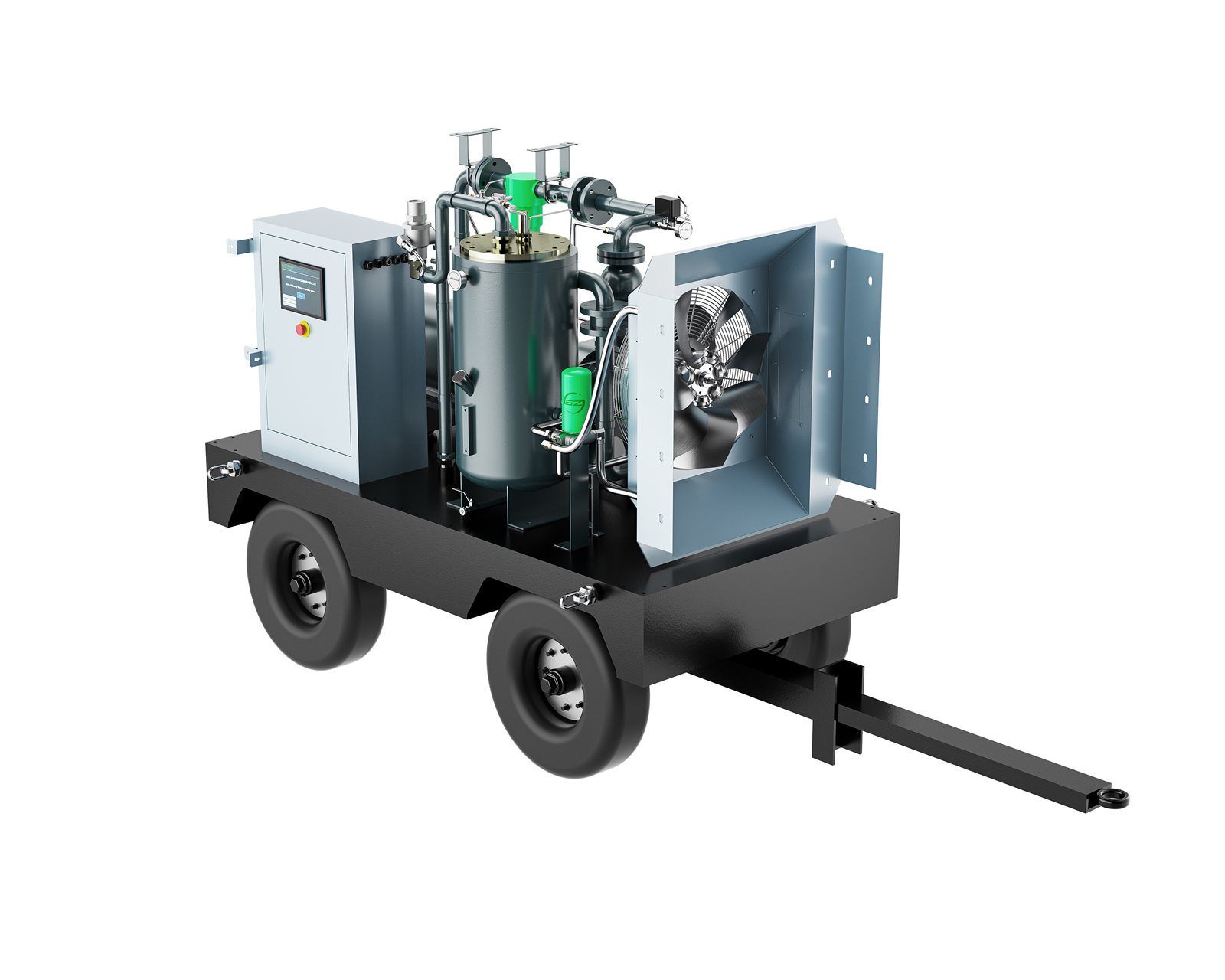
Electric units have far fewer consumables and lower daily running costs. There is no fuel to store, no fuel filter to change, and no engine oil to monitor. Maintenance focuses on the motor, electrical connections, and cooling system. For rental fleets serving urban and indoor projects, electric portable compressors reduce maintenance burden, noise, and emissions at the same time.
Maintenance Tips for Rental Fleets
If you manage rental portable compressors, your maintenance strategy directly affects utilization and customer satisfaction. Consider these fleet-specific practices:
- Pre-rental inspection. Perform a full check — oil, filters, belts, leaks, safety devices, and documentation — before every rental dispatch. Attach a checklist report to the rental contract.
- Hour-meter discipline. Base service intervals on actual running hours, not calendar time. A unit rented continuously in summer may need monthly service, while a winter unit may sit idle for weeks.
- Return inspection. Inspect every unit when it comes back. Photograph the condition, record the hour meter, and address any damage or missing accessories before the next dispatch.
- Standardize parts. Use the same filters, oils, and spare parts across your fleet to simplify inventory and technician training.
- Rotate units. Avoid running one unit to 2,000 hours while its twin sits idle. Balanced usage keeps the fleet’s maintenance schedule predictable.
- Keep records digital. A simple spreadsheet or fleet management app with service history per serial number helps you predict failures and prove compliance.
Common Problems and Quick Troubleshooting
Even with excellent maintenance, problems can occur. Here are the most common issues on portable compressors and their typical causes:
| Symptom | Likely Cause | Quick Action |
|---|---|---|
| Compressor won’t start | Dead battery, low fuel, safety shutdown active | Check battery, fuel, and fault display |
| Low discharge pressure | Clogged air filter, inlet valve issue, air leak | Replace filter, check inlet valve and hoses |
| High discharge temperature | Blocked cooler, low oil level, belt slipping | Clean cooler, top up oil, adjust belt |
| Excessive oil carryover | Worn separator element, overfilled oil | Replace separator, correct oil level |
| Engine overheating | Blocked radiator, low coolant, fan failure | Clean radiator, top up coolant, check fan |
| Unit vibrates excessively | Loose mounting bolts, worn coupling, failing bearing | Tighten mounts, inspect coupling and air end |
| Air receiver won’t drain | Clogged drain valve, excess water in system | Clean valve, check water separator |
If a problem appears, always stop the unit, identify the root cause, and fix it before resuming work. Running a damaged compressor to “finish the job” almost always turns a small repair into a major overhaul.
Keep a Maintenance Log
A maintenance log is not bureaucracy — it is the backbone of a reliable fleet. Record the following for every service event:
- Date and hour meter reading
- Service type (daily / weekly / monthly / quarterly / annual)
- Oil and filter changes performed
- Parts replaced, with part numbers
- Measurements taken (belt tension, oil pressure, discharge temperature)
- Any abnormal observations and corrective actions
- Name of the technician who performed the service
This log helps you spot trends — for example, a unit that consistently runs hot or leaks oil between services — before they become failures. It also provides the documentation required for warranty claims, insurance, and regulatory inspections.
Frequently Asked Questions
How often should a portable air compressor be serviced?
Daily checks should be performed before every start. Light service is recommended weekly or every 40–50 hours, and full service every 500 hours or quarterly, with a comprehensive annual service. Always follow the interval stated in your manufacturer’s manual, adjusted for harsh conditions.
What is the typical lifespan of a portable air compressor?
With proper maintenance, a quality portable compressor can operate for 20,000 to 40,000 hours before a major air end overhaul. Engine life on diesel units typically reaches 10,000–15,000 hours with regular oil changes.
Which oil should I use in my compressor?
Use only the oil grade and type specified by the manufacturer for your ambient temperature range. Compressor oils are specially formulated for the air end, and engine oils for diesel engines are formulated separately — do not substitute one for the other.
Do electric portable compressors need less maintenance than diesel units?
Yes. Electric units eliminate the engine’s fuel, oil, and emissions systems, which are the majority of diesel maintenance tasks. Electric units still require filter, oil, cooling, and electrical checks on the same schedule.
How do I know when to replace the air filter?
Use the restriction indicator if fitted, and inspect the element at every weekly service. Replace it when it is visibly dirty, damaged, or when the indicator enters the red zone, or at the manufacturer’s recommended interval — whichever comes first.
Is it necessary to drain condensate every day?
Yes. Condensate accumulates from atmospheric moisture every time the compressor runs. If it is not drained, water can corrode the receiver tank and piping, contaminate the oil, and damage downstream tools.
Conclusion
A portable air compressor is only as reliable as the maintenance routine behind it. The daily five-minute walk-around, the weekly filter and condensate checks, the quarterly fluid and belt service, and the annual comprehensive inspection all work together to keep your diesel or electric mobile compressor available, efficient, and safe.
Preventive maintenance is the cheapest insurance in the compressed air business. It protects your investment, protects your job site schedule, and protects your people. Whether you run a single unit or a national rental fleet, a disciplined maintenance program will pay for itself many times over in avoided downtime and extended equipment life.
If you are comparing machines, building a new fleet, or replacing an aging compressor, explore the full range of diesel and electric portable compressors at sz-portable.com and find a model matched to your duty cycle and service capability.
For more guidance on selecting the right machine for your application — including sizing, pressure, and flow considerations — visit our portable compressor selection resources and contact our team for application support.