When evaluating a portable air compressor manufacturer, many buyers focus on visible specifications—airflow, pressure rating, engine brand, or price. However, in real industrial applications, long-term performance depends far more on the manufacturer’s engineering capabilities than on headline numbers.
Professional manufacturers do not treat portable air compressors as assembled products. They design them as integrated systems engineered to survive continuous duty, harsh environments, and unpredictable load conditions. Understanding these engineering differences is critical for engineers, distributors, and procurement teams seeking long-term operational reliability rather than short-term cost savings.
For a broader manufacturer-level comparison, refer to our in-depth guide on Portable Air Compressor Manufacturer.
Engineering Beyond Assembly: System-Level Design Thinking
Many portable air compressors on the market are assembled using standardized layouts: a diesel engine, a rotary screw air end, a cooling module, and a steel enclosure. While this approach reduces manufacturing cost, it often sacrifices durability and operational stability.
A professional portable air compressor manufacturer approaches design differently—at the system level.
Key system-level considerations include:
- Matching engine torque curves to real compressor load profiles
- Minimizing torsional vibration across the drivetrain
- Balancing airflow, cooling efficiency, and acoustic control
- Designing structural rigidity to prevent fatigue over thousands of operating hours
Manufacturers lacking in-house engineering capabilities often rely on generic platforms. These machines may meet rated specifications during testing but tend to experience premature wear, overheating, or unstable air delivery in real job-site conditions.
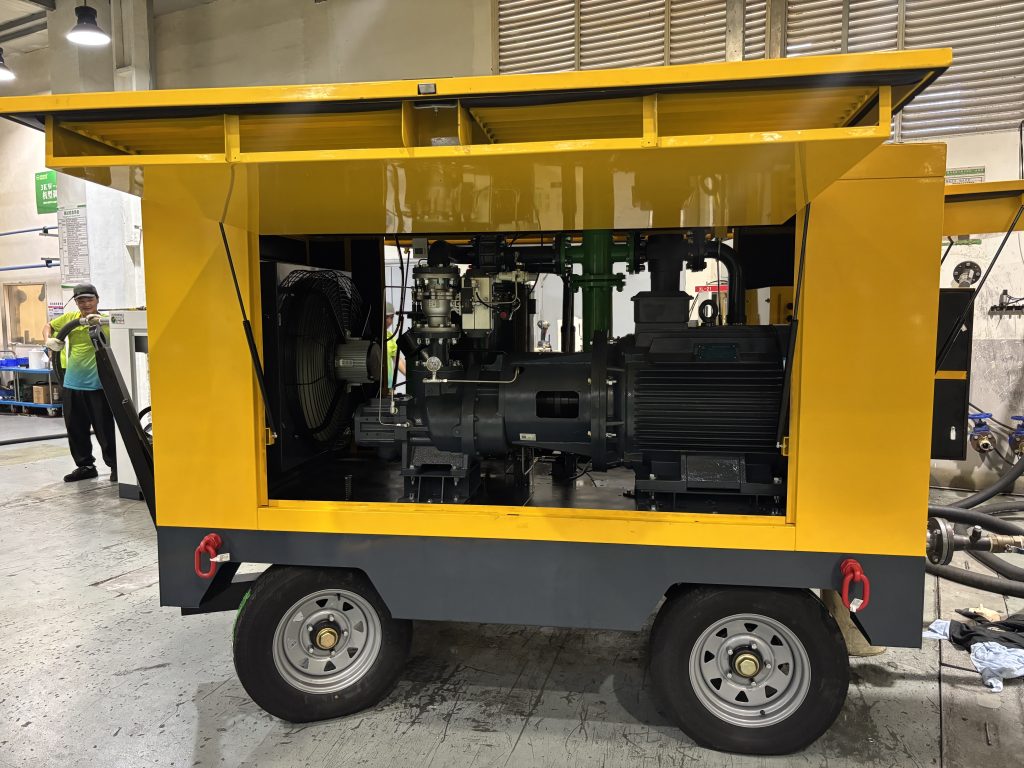
Air End and Engine Matching: The Core of Performance Stability
At the heart of every portable air compressor lies the interaction between the engine and the air end. While many suppliers highlight engine brand alone, professional manufacturers understand that matching matters more than branding.
Critical engineering variables include:
- Engine torque availability at varying RPM ranges
- Air-end compression ratio and efficiency curve
- Load/unload transition behavior under fluctuating demand
- Fuel consumption under partial and continuous load
A poorly matched system may achieve rated airflow briefly but suffer from fuel inefficiency, excessive wear, or unstable pressure output during extended operation.
Learn more about system optimization in our guide on Rotary Screw Air End Technology.
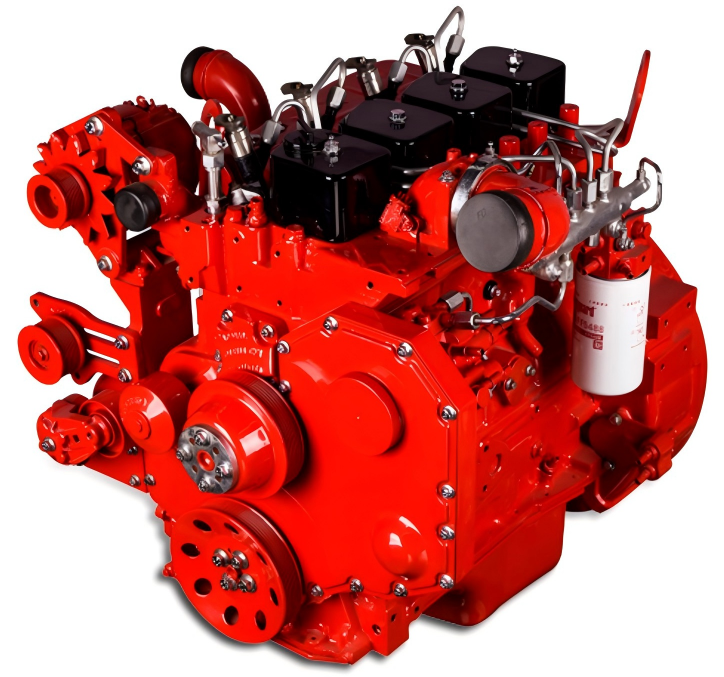
Structural Engineering and Vibration Control
Portable air compressors operate in environments that impose constant mechanical stress—uneven terrain, transportation vibration, and continuous load cycles. Structural engineering quality directly impacts service life.
Advanced manufacturers conduct:
- Finite element analysis (FEA) on frames and enclosures
- Vibration isolation design for rotating components
- Reinforced mounting structures for transport durability
By contrast, entry-level manufacturers often overlook vibration fatigue, leading to cracked frames, loose fasteners, and accelerated component failure.
Structural integrity is not visible in brochures, but it becomes evident after thousands of operating hours.
Thermal Management as an Engineering Discipline
Cooling system design is one of the clearest indicators of a manufacturer’s engineering maturity. In real-world operation—especially in mining, construction, and Middle Eastern environments—thermal margins determine uptime.
Professional portable air compressor manufacturers design cooling systems with:
- Oversized radiators for high ambient temperatures
- Independent cooling paths for oil, air, and engine systems
- Optimized airflow channels to prevent heat accumulation
- Easy-clean layouts for dusty job sites
Inadequate cooling does not only cause shutdowns; it accelerates oil degradation, reduces air-end efficiency, and shortens overall machine lifespan.
Explore this topic further in Portable Air Compressor Cooling System Design for Harsh Environments.
Control Logic and Load Management
Engineering capability extends beyond hardware. Control logic plays a critical role in real-world efficiency and reliability.
High-level manufacturers invest in:
- Stable load/unload transition algorithms
- Intelligent idle speed management
- Protection logic against overload and overheating
- Clear fault diagnostics for faster service response
These systems reduce fuel consumption, stabilize airflow, and protect core components during continuous-duty operation.
Why Engineering Depth Defines Manufacturer Credibility
From the outside, many portable air compressors appear similar. From the inside, engineering depth separates professional manufacturers from assembly-focused suppliers.
A credible portable air compressor manufacturer demonstrates engineering competence through:
- Proven system integration, not just component sourcing
- Validated performance under continuous and harsh conditions
- Structural and thermal reliability over the equipment lifecycle
- Consistent manufacturing execution aligned with design intent
For buyers focused on long-term reliability, these factors often matter more than initial purchase price or nominal specifications.
If you are evaluating manufacturers for demanding applications, explore our Portable Air Compressor Product Range or contact our engineering team for application-specific recommendations.
Final Takeaway
Engineering capability is not an abstract concept—it directly determines how a portable air compressor performs after months and years of operation. Manufacturers that invest in system-level engineering, validation, and manufacturing discipline consistently deliver lower operating risk and better lifecycle value.
When selecting a portable air compressor manufacturer, understanding what lies beneath the enclosure often makes the difference between sustained productivity and repeated downtime.