Modern industrial operations demand robust air supply. Construction sites, mining projects, and field maintenance rely on compressed air. It powers critical tools and processes. Consistent, high-volume air is non-negotiable. Portable diesel air compressors have become the backbone for such demanding tasks. They offer unmatched independence and muscle in remote locations. This article compares key models across three vital aspects: Power, Cost, and Reliability. Our goal is to equip you with the knowledge to make a confident, cost-effective investment for your heavy-duty needs.
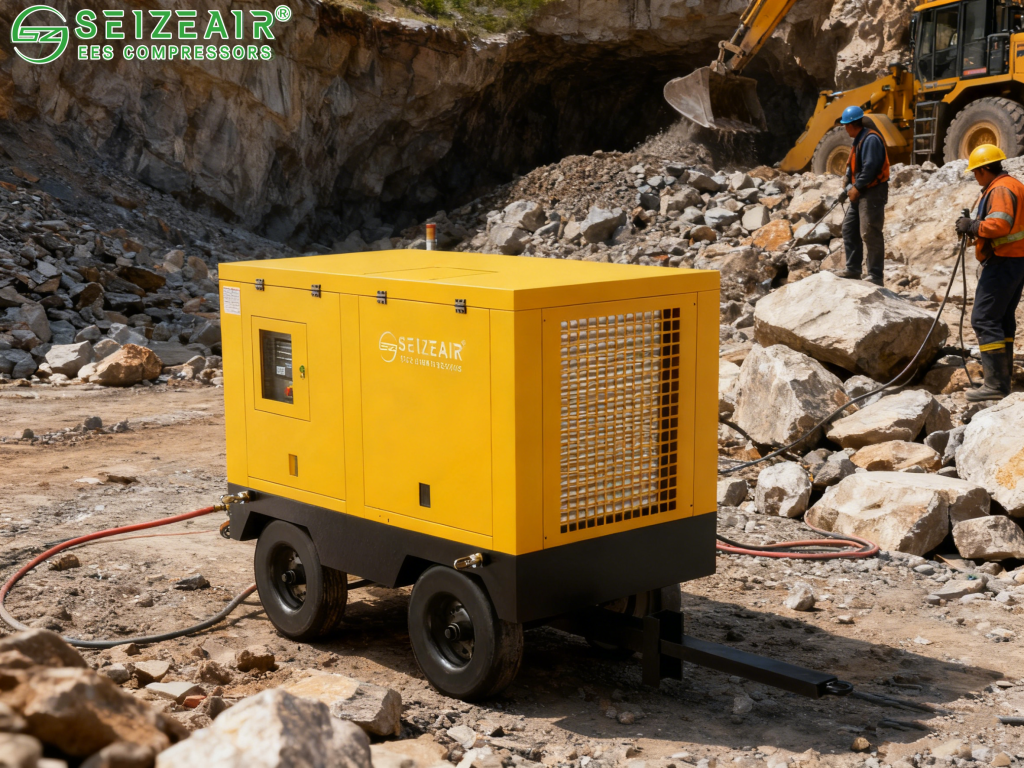
1. Key Performance Metrics — What Truly Matters
Choosing the right diesel engine air compressor starts with understanding specs. Key metrics are CFM, PSI, tank volume, duty cycle, and runtime. CFM (Cubic Feet per Minute) measures airflow volume. PSI (Pounds per Square Inch) indicates air pressure. A large tank volume buffers demand surges. Duty cycle defines continuous operation capability. Runtime depends on fuel tank size and engine efficiency.
Different tasks have specific air requirements. A paving breaker may need 90 PSI and 90 CFM. Industrial sandblasting can demand 100 PSI and over 300 CFM. Pipeline testing requires high pressure and consistent, large volume. Matching your tools to the compressor’s output is crucial. An undersized unit causes tool stalling and engine damage.
The choice between a 300 cfm diesel air compressor and a 500 cfm diesel air compressor is significant. The 500 CFM model delivers more power for heavier tools. It often uses a larger, more fuel-efficient engine. It maintains stable pressure under high demand. The 300 CFM unit is more compact and cost-effective for medium-duty tasks. Understanding this difference is key to how to choose a diesel engine air compressor.
Reference Table for Matching Tools with Air Compressor Specifications
| Typical Application: Light Drilling, Inflation | Required Air Volume (CFM): | Required Pressure (PSI): | Recommended Specifications for Portable Diesel Air Compressors |
|---|---|---|---|
| Light Drilling, Inflation | 30-100 CFM | 90-100 PSI | Medium and small-sized (100-150 CFM) |
| Rock Breaking, Heavy Drilling | 90-150 CFM | 90-100 PSI | Medium-sized (150-250 CFM) |
| Sandblasting, Large Breakers | 150-300+ CFM | 90-100 PSI | Large-scale (300-500 CFM) |
| Pipeline Testing, Industrial Painting | 200-500+ CFM | 100-150+ PSI | High-power large-scale (400-750+ CFM) |
2. Cost Considerations — Beyond the Purchase Price
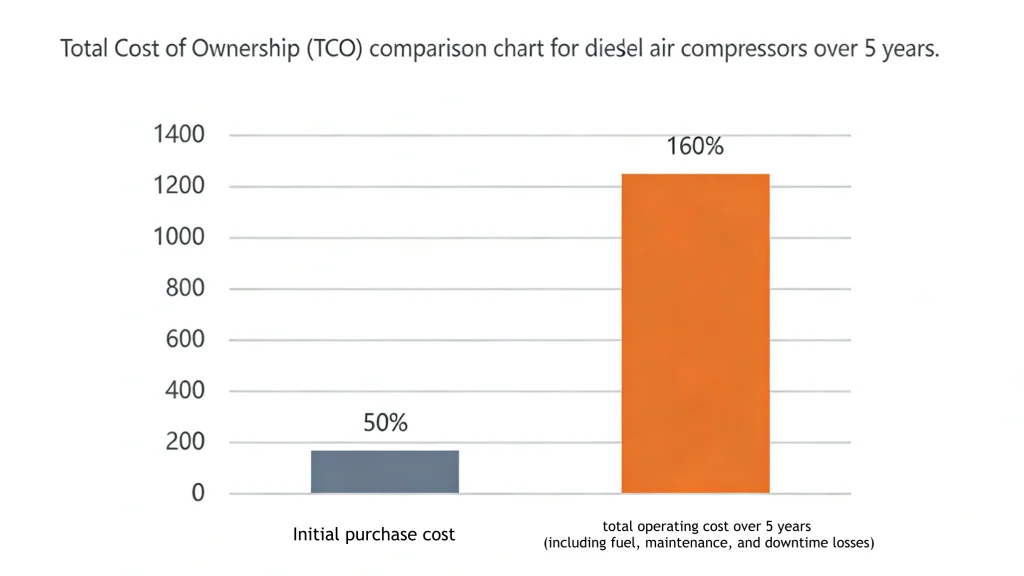
The initial price is just one part of the Total Cost of Ownership (TCO). For a portable diesel air compressor for field work, fuel is a major ongoing cost. Modern diesel engines offer better fuel efficiency. Compare gallons per hour (GPH) consumption at specific loads. Regular maintenance costs include oil, air, and fuel filters. Also consider engine oil and coolant changes.
High-power compressors consume more fuel per hour. But they complete tasks faster. This can lower overall project cost. A medium-power unit may run longer at full load. This increases wear and total fuel burn. Calculate costs based on your actual weekly runtime.
Always compare long-term operational costs. Include energy (fuel), maintenance, and potential downtime. A cheaper unit with high fuel consumption is costly over time. Reliable brands may have higher upfront costs. Yet they minimize expensive unplanned downtime. Use this diesel engine air compressor buying guide to evaluate true cost.
3. Reliability in Demanding Field Applications
Diesel industrial air compressor units excel in harsh environments. Their engines are built for heavy-duty, continuous operation. They are ideal for remote mining, construction, and oil fields. Diesel fuel is safer and more available than gasoline in remote areas. These engines also generate high torque at low RPMs. This is perfect for air compressor demands.
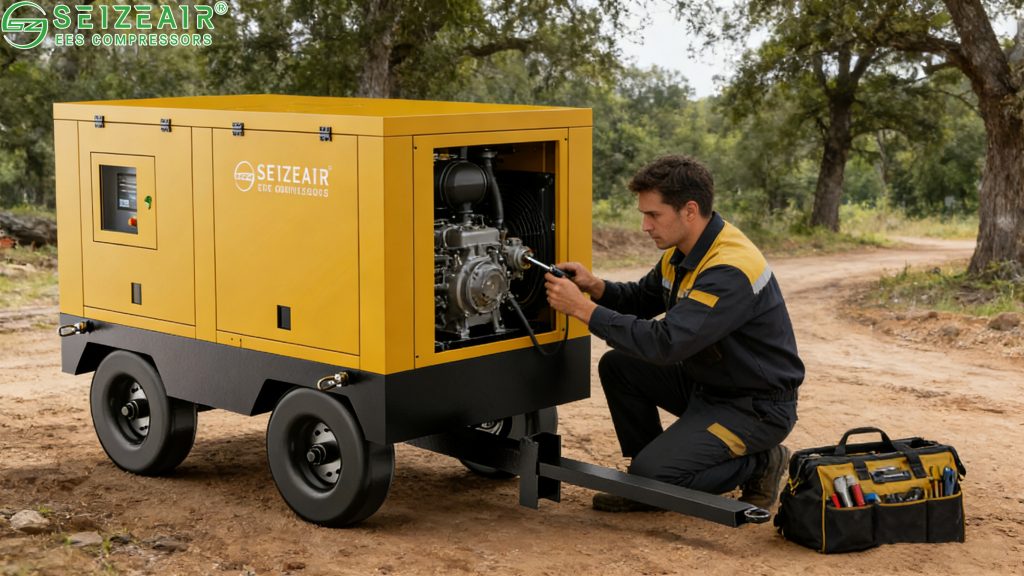
Key durability indicators include robust air filtration. It protects the engine from dust. Efficient cooling systems prevent overheating in high temperatures. Vibration-resistant components ensure longevity. Easy electric start is crucial for daily field use. Service points should be easily accessible for quick maintenance.
“Portability” is not just about wheels. It means quick deployment across multiple sites. It enables flexibility in shifting project phases. For contractors managing several locations, mobility is key. This reduces equipment idle time and boosts ROI. Safety and stable output over long shifts are critical advantages. They ensure project timelines and worker safety are maintained.
4. Diesel vs. Other Types — Choosing the Right Tool
Diesel portable compressors are not always the only solution. Here is a transparent comparison:
- Electric Compressors: Ideal for indoor workshops. They are quieter and have zero emissions. But they tether you to a power source. They lack field mobility.
- Stationary Screw Compressors: Perfect for large factory air supply. They are efficient for constant high demand. However, they are not movable and require significant infrastructure.
- Portable Piston Compressors: Often smaller and cheaper. Suitable for intermittent use. For continuous heavy-duty work, diesel screw portables are more reliable and efficient.
Choose a diesel engine air compressor for remote, multi-site, or high-demand field work. Choose electric for fixed indoor locations with power. Consider noise and emission regulations in residential areas. Always match the machine to your primary work environment and task profile.
5. Selecting a Supplier — The Value Beyond the Machine
Not all diesel engine air compressor manufacturers are equal. A reliable supplier is as important as the machine itself. Evaluate their service network coverage, especially near your sites. Ask about spare parts availability and typical delivery times. Strong after-sales support prevents prolonged downtime. Look for relevant quality certifications (e.g., ISO, CE).
When comparing top portable diesel air compressor brands, consider their industry reputation. Review their focus on fuel efficiency and durability engineering. Do not make a decision based on price alone. Consider the total value package: product reliability, dealer support, and lifecycle cost. A trustworthy partner ensures your compressor remains a productive asset for years.
6. Your Practical Checklist
Pre-Purchase Questions:
- Do the CFM and PSI meet my peak tool requirements?
- What is the fuel consumption (GPH) at my typical operating load?
- How accessible are filters, drains, and service points?
- What is the warranty period and what does it cover?
- Is there a local dealer or service center for support?
- What are the delivery lead times for the machine and common spare parts?
Post-Purchase Maintenance Advice:
- Follow the manufacturer’s service schedule strictly.
- Change air, oil, and fuel filters as recommended.
- Check and drain air tanks of moisture daily.
- Monitor engine coolant and oil levels before each operation.
- For heavy-use in mining: shorten inspection intervals. Keep critical spare parts (filters, belts) on-site. Monitor fuel quality in storage.
Conclusion
For most remote, heavy-duty applications, a well-chosen portable diesel air compressor is the optimal choice. It combines power, autonomy, and durability. Success hinges on accurate needs assessment. Prioritize long-term operating costs over initial price. Partner with a reputable supplier known for service. Commit to a rigorous preventive maintenance routine. This approach maximizes your equipment’s reliability and return on investment.
Actionable Next Step: Use the checklists and tables in this guide to evaluate your options. For a detailed, printable pre-purchase inspection checklist, or to consult with an equipment specialist, reach out to a trusted industry partner.
About SEIZEAIR: As a manufacturer committed to industrial efficiency, SEIZEAIR provides a range of reliable and energy-saving screw air compressors, supporting various sectors with durable compressed air solutions.